




CLARKSVILLE, TN (CLARKSVILLE NOW) – The Clarksville mayor and half the City Council are up for election in November, and candidates are actively campaigning. To help voters with their decisions, Clarksville Now is publishing where they stand on top issues in the races.
The current Ward 7 councilman, Travis Holleman, is not seeking re-election. The candidates for the open Ward 7 seat are Christina Hardesty and John Dewey Robinson. Here are their responses on five key topics. Both candidates, presented here in alphabetical order, were asked to respond in 100 words or less.
1. Streets, sidewalks
Clarksville continues to play catchup in improving/constructing streets and sidewalks. What should be done to speed up the process?
Hardesty: To accelerate infrastructure delivery, Clarksville should prioritize public-private partnerships that require developers to install contiguous sidewalk networks during site construction. Streamlining the municipal bidding process and using targeted bond funding exclusively for high-traffic corridors will shorten project timelines. Furthermore, expanding the Transportation Modernization Plan to focus on rapid-execution repaving and dedicated grant-matching for pedestrian pathways will help catch up on backlogged projects without overwhelming the immediate annual budget.
Robinson: The street departments’ core areas of focus include stormwater management, road maintenance, traffic control, and engineering. Allowing Clarksville Gas & Water to take over the responsibilities of stormwater management would give the street department more time and resources to invest in streets and sidewalks. We must uphold and enhance current requirements for developers requiring more sidewalk coverage as well as traffic improvements in certain cases. We only require developers to build sidewalks internally. Requiring external sidewalks would allow the city to be more efficient and effective in adding sidewalks and connecting them as needed.
| PUBLICIZE YOUR CAMPAIGN: Click here to learn more about campaign advertising on Clarksville Now
2. City budget shortfall
Mayor Joe Pitts pushed for a large tax increase to cover what he called a revenue shortfall, then halted several capital projects when the increase wasn’t fully approved. What should be done to address this problem?
Hardesty: Addressing the revenue gap requires a comprehensive line-item audit to trim non-essential operational spending while exploring targeted revenue streams beyond broad property tax hikes. This audit must examine department management, evaluating department head compensation, past spending, and turnover rates to ensure appropriate oversight. The city should re-evaluate capital project timelines by adopting a multi-year phased funding model rather than halting projects outright. Establishing clearer fiscal reserves, capturing growth revenue from commercial expansion, and utilizing regional grant funding can sustain critical projects without placing an undue tax burden on residents.
Robinson: An independent, outside assessment of the city’s finances is needed to address our current financial situation. This should include analyzing and prioritizing our current and future capital projects. Each project that has been approved in the past should have had an allocated source of funding. It is imperative that the council along with the residents of Clarksville have the means to understand how our budget has gotten off track. This budget assessment will allow us to find that out and begin the work to get back on track.
| NEW TO CLARKSVILLE? Check out our Newcomer’s Guide
3. Affordability
Costs of housing are rising dramatically in Clarksville. What should be done to address the need for more affordable housing?
Hardesty: We make Clarksville more affordable by putting families first and prioritizing accessible paths to homeownership. Clarksville must reform zoning codes to permit missing-middle housing, such as duplexes, townhomes, and accessory dwelling units, in residential zones. Partnering with non-profits and private developers through tax incentives or land donation programs can incentivize dedicated affordable housing units. Additionally, fast-tracking permitting processes for developments that commit to below-market rental rates will reduce construction costs and expand housing inventory to match the city’s rapid population growth.
Robinson: The city needs to put a higher priority on fixing and enhancing the housing authority. Clarksville has also fallen behind in Low Income Housing Tax Credit projects in the past 16 years. Another approach is creating targeted incentives to spur infill development focused on affordable housing. Infill development does not require additional infrastructure expenditures. We could structure incentives for local builders to price housing in line with thresholds from US Dept of HUD. It would not cost the city anything to waive tap fees, permit fees, or place a five-year cap on property tax for a program that could potentially increase affordable housing in the most cost-efficient way.
| MORE: Election news, including candidate announcements
4. Higher-paying jobs
Wages have improved in Clarksville but continue to lag other regions. What should be done to improve household incomes?
Hardesty: We need competitive wages here in Clarksville for everyone—from our first responders to the average worker—and when big companies want to locate here, we must incentivize them with a “Clarksville First” mindset. Boosting household incomes depends on recruiting high-value industries—such as advanced manufacturing, technology, and logistics—to local industrial parks. Strengthening ties between Austin Peay State University, local technical colleges, and incoming businesses will build custom workforce training pipelines tailored to higher-wage positions. Additionally, expanding small business incubators and offering local incentives for companies that commit to paying above regional median wages will elevate Clarksville’s overall salary baseline.
Robinson: Clarksville has done a good job in recent years recruiting businesses in the manufacturing industry, and we’re actively adding to our workforce by bringing in big hospitals. It’s time to shift our focus to being an attractive destination to companies that offer higher paying jobs. Core quality of life issues like city parks, greenways, youth sports, walkability, and general aesthetics of our city play a large part in this and would improve our city as a whole. Attracting higher paying jobs requires the city, the county, and the EDC to all be working in unison towards common goals.
| GET YOUR LOCAL MORNING NEWS: Sign up for our free daily email newsletter.
5. Flood prevention
Several Clarksville properties flooded during recent rains. What should be done to address stormwater issues to prevent this from happening again?
Hardesty: We must protect Clarksville residents by halting construction in known flood areas and holding builders strictly accountable, ensuring rigorous oversight with zero tolerance for “pencil whipping” inspections. To mitigate recurring urban flooding, Clarksville should modernize its aging drainage systems by utilizing dedicated stormwater utility fees to fund major infrastructure overhauls. The city needs to enforce stricter retention basin requirements on new residential developments and fund natural drainage solutions like green infrastructure and bioswales. Prioritizing regional watershed assessments and clearing obstructed channels in flood-prone neighborhoods will significantly reduce run-off during heavy rainfall events.
Robinson: There are two studies currently underway, one sourced from CG&W and one sourced from the street department. We need to gather the information from these studies and develop a plan of action to address existing flooding issues. Future developments need to be required to do a full analysis of their stormwater impact to not only their development, but the neighboring community. If there are concerns, solutions need to be put in place, or plans need to be rejected. Not rejecting plans we knew would have a bad long-term effect has led us to where we are today.
| MORE: Mayor of Clarksville candidates on streets, taxes, flooding
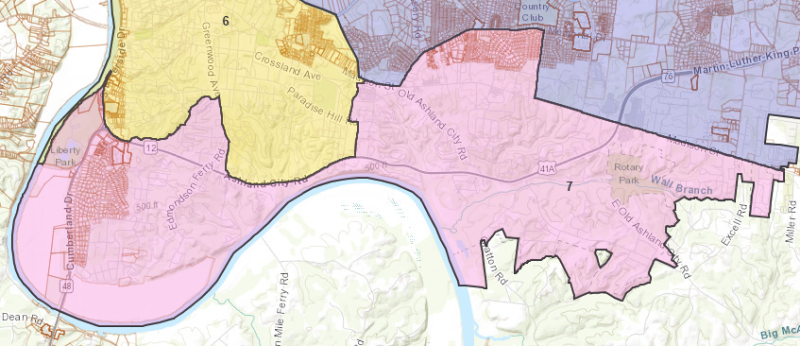
About Clarksville Ward 7
Ward 7 covers the south edge of Clarksville from the Cumberland River to the Madison Street end of the city limits:
| MORE: Who’s on November ballot for governor, Congress, legislature, City of Clarksville races
How to register, how to vote in November
The State General and City of Clarksville election will be Tuesday, Nov. 3, with governor, Congress, General Assembly, city mayor and half the City Council on the ballot.
The voter registration deadline is Oct. 5. Early voting will be Oct. 14-29.
| ON THE ISSUES:
- State House District 67: Ronnie Glynn and Chris Lanier
- State House District 68: Aron Maberry and Garfield Scott
- State House District 75: Michael Lankford and Allie Phillips
Tennessee voters are required to show a valid photo identification. A driver’s license or photo ID issued by the Tennessee Department of Safety and Homeland Security, the Tennessee state government, or the federal government are acceptable, even if expired. College student IDs are not accepted.
For more information on voting, including registering to vote, go to the Montgomery County Election Commission website, visit their office at 350 Pageant Lane, Suite 404, email vote@mcgtn.net or call 931-648-5707.
| BREAKING NEWS PUSH ALERTS: Sign up for our free Clarksville Now app