



CLARKSVILLE, TN (CLARKSVILLE NOW) – Jurors heard about digital evidence, family dynamics, and forensic findings as testimony continued Wednesday and Thursday in the trial of the Nashville-area paramedic charged with first-degree murder in the 2021 deaths of his wife and father-in-law.
Matthew David Konen, 36, has pleaded not guilty in the deaths of Rachel Konen, 30, and her father David Rodgers, 62.
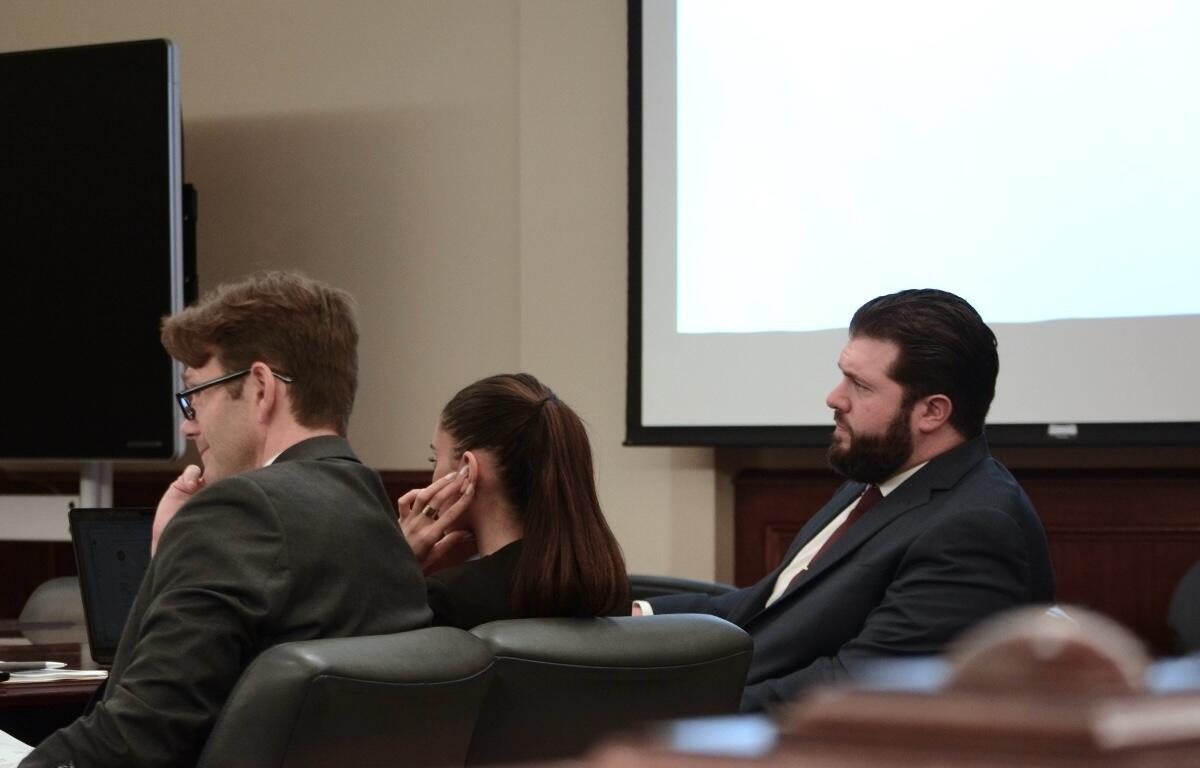
Here are five takeaways from days five and six of testimony.
1. Family friend, victim’s girlfriend give insight on victims
Katelyn Martinek, a childhood friend of Rachel’s, testified that they knew each other since they were about 4 years old. “I knew her mother and father very well,” she said. “I also knew her family after they were married.”
Martinek told jurors she and Rachel talked almost daily and she would visit her about once every month or two, especially for birthdays and holidays. She said she had “very casual conversations” with Rodgers, describing him as “very fatherly” and “loving.” She said he loved playing with the grandchildren and “never saw anything out of the ordinary.”
| MORE: Trial begins for former paramedic accused in 2021 murder of wife, father-in-law
Kathy Adams, Rodgers’ girlfriend, testified that he and his daughter had a close relationship. “He loved his grandkids,” she said. “He played with them a lot.”
Adams said she knew Rodgers owned a handgun and Konen knew too. She said in the driveway of Konen’s home, Rodgers wanted to show the firearm to Konen and he “checked it out.” Jurors previously saw Konen tell officers in a video of a police interview that he did not know Rodgers owned a gun.
Adams also said she believes she has the gift of foresight. She said she felt like “something bad was going to happen” and “knew the flood was coming” before the 2012 Nashville flood occurred. She also gave a statement to police that she had given Rodgers warning about his death. “I did warn David, ‘be careful.’ I didn’t know he was going to die,” she said. “But I knew his life was in danger. I don’t know how I know.” Adams told jurors she was “begging David to get Rachel out of the house a week before that happened.”
2. Former co-workers say Konen skilled with firearms
Fallon Washington, an advanced EMT and former partner of Konen’s, told jurors they worked together in 2020. Washington testified that she was paired with Konen at work for “maybe a year or less” and that they spent a significant amount of time together.
“I trust him with my life,” she said about his abilities as a paramedic. Washington said she got to know Rachel through Konen and described her as “really sweet” and “just all around really personable.” She called Rodgers “adoring of the grandkids and his daughter.”
Washington testified that in their off time, Konen taught her how to operate and clean a firearm as well as “take it apart and put it back together.” She said she considered him a good marksman.
| MORE: 3 takeaways in trial of former paramedic accused in 2021 deaths of wife, father-in-law
Arsenio Hardrick, a paramedic and another former co-worker of Konen’s, told jurors they worked together from time to time. Hardrick said Konen, in reference to his finances, talked about “the degree of difficulty it would cause if he were to get divorced.”
Hardrick testified that Konen owned several firearms and they would shoot targets at Konen’s home. He added he considered Konen a good marksman. Hardrick described Rodgers as a “nice gentleman” and “always welcoming.” He said each time he saw Rodgers and Rachel, “it appeared to be pleasant interactions.”
3. Phone activity, financial concerns, search history
Criminal Investigator Charles Arms, expert in mobile forensics and cellular mapping analysis, testified that they pulled phone records from Rachel, Rodgers, and Konen’s phones. Rodgers’ phone connected to a cell tower in the general area of the Westwood Drive home at around 4:09 p.m., while Konen’s was at 5:45 p.m. Arms told jurors Rachel’s phone “locked and unlocked” at 6:35 p.m. and minutes later received a picture from the man she had gone on a date with.
During the first couple weeks of January 2021, Konen messaged two friends to see if they were interested in a roommate. He told them Rachel was trying to kick him out and said he could not “comfortably afford to live alone.” Konen also texted his then-girlfriend, now wife, that he was “worried about money” and excited to live with her. “I cannot wait to have my kids and you all under one roof,” he said.
Arms noted that there were over 1,600 text messages between Konen and Rachel in January 2021. During the first couple weeks of the month, Rachel texted Konen expressing gratitude for his sacrifice in the work force and providing for their family. They also discussed in texts that she wanted him to move out. In another text chain, Konen says, “You’re pushing me out of my kids lives because you can’t heal but you still want to chat.” There were many messages expressing conflicts as well as light-hearted conversations and talks about their kids. Rachel had also messaged Konen expressing worry for her father, saying, “It’s either mental health stuff or early dementia.”
Arms also went through months of Rodgers’ search history. Some of the searches from late December 2020 and the first week of January 2021 included:
- “What happens when you overdose”
- “Fentanyl interactions”
- “Companion funeral and cremation services”
- “City harvest church”
- “Where can you go for help from demonic influence”
4. Forensic testing on DNA and GSR
TBI Forensic Scientist Supervisor Lisa Forester, expert in forensic biology, told jurors she tested items from the crime scene for DNA. There was blood on the trigger of the handgun that was a mixture of at least two individuals including Rodgers and an “inconclusive” contributor. The grip of the firearm had a mixture of at least three individuals, with Rodgers blood and the others “inconclusive.” Konen had some small blood stains on his shirt, some of which were his, some that were “inconclusive,” and one that was confirmed to be Rodgers’. Rachel had small blood stains on her sweatshirt, most of which were “inconclusive,” one that was Konen’s, one that was Rachel’s, and one that was Rodgers’. Forester testified that Rachel’s left shoe also had blood on it confirmed to be from Rodgers.
| MORE: Divorce plans, family finances, Ring footage: 5 takeaways in double murder trial
TBI Forensic Scientist Lindsey Anderson, expert in microanalysis, testified that particles consistent with GSR (gunshot residue) were present on Konen’s hands, in his ears and nose. “The presence of gunshot residue indicates that an individual could have fired a weapon, been nearby when it was fired, or had gunshot residue transferred to them from somewhere else,” she said.
Anderson said there were also particles consistent with GSR on Rodgers clothing, but not on his hands. Jurors saw a photo of Rodgers hands which had blood on them. She said it is possible for blood to physically mask GSR and produce a negative result, but noted she “did not notice enough blood” in the samples from Rodgers’ hands to include it in her report. She did not receive samples from Rodgers’ face, which was covered in blood.
Anderson noted that Konen’s clothes were not tested due to TBI policy when someone’s skin tests positive for GSR. She said clothing holds GSR much longer and that “over the course of several hours” GSR can be rubbed off of the skin. “Clothing is, I would almost say, lesser evidence than hands as far as the incident in question,” she said. “That is why you always choose to test kits from skin first because they hold it less time and therefore they are more related specifically to the incident in question.”
Anderson testified that GSR cannot indicate who the shooter is, but noted that “a simple touch” from hands with GSR on them could cause a transfer.
5. Firearms expert says Glock showed no malfunctions during testing
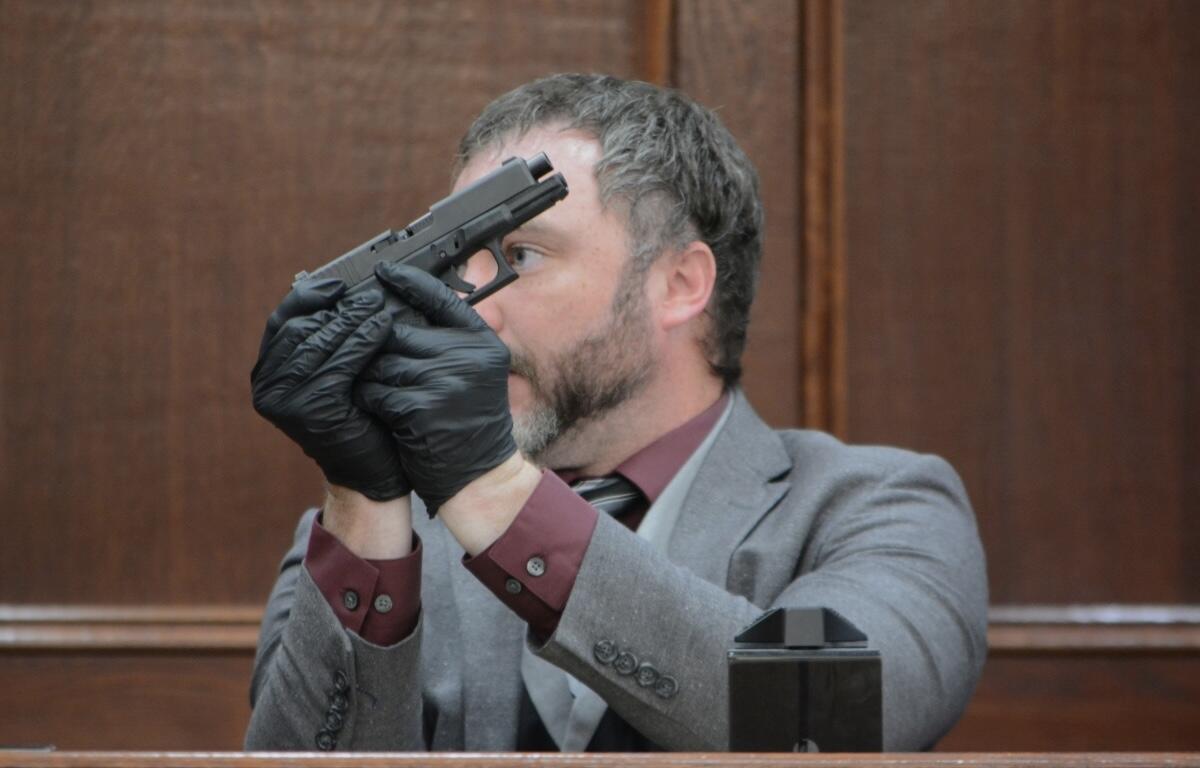
TBI Forensic Scientist Supervisor Dereck Proctor, expert in firearm analysis, testified that the murder weapon was a Glock model 19 semi-automatic pistol. Proctor explained to jurors how the mechanics of that firearm works including the bullets and magazine.
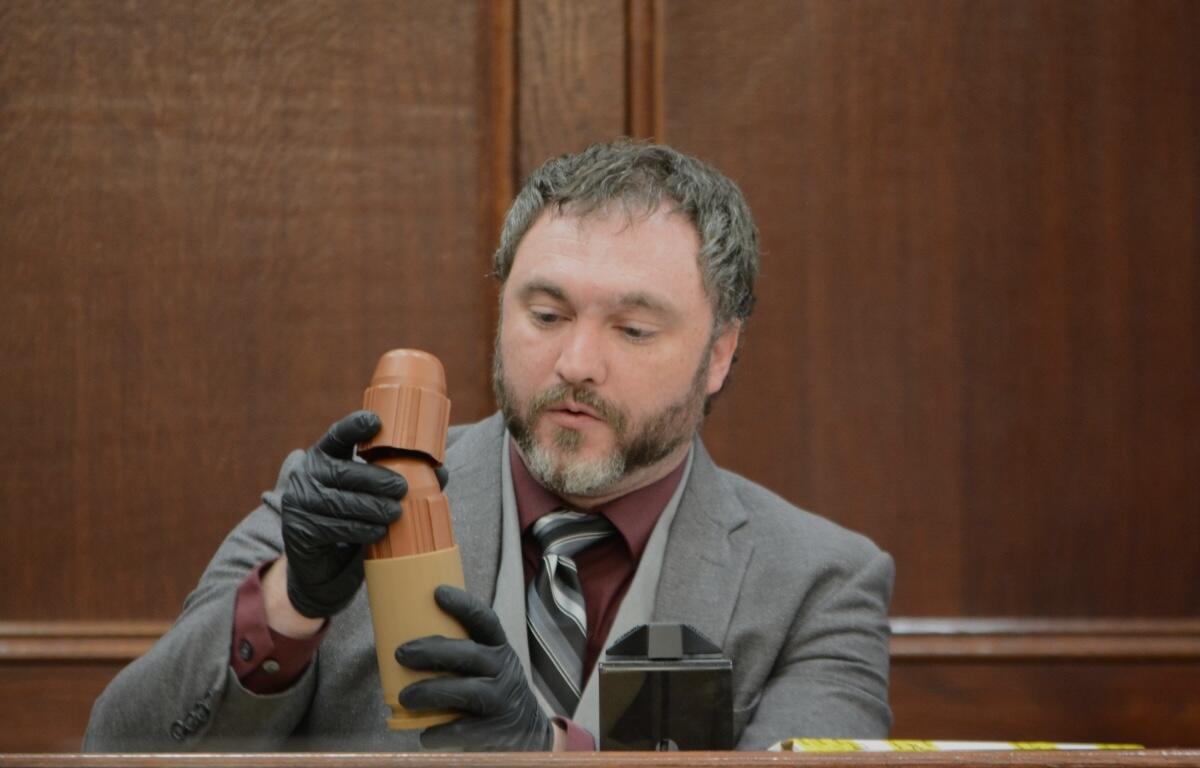
He testified that when test firing the weapon approximately 22 times, it did not experience a single misfire. “I did not experience any malfunctions that prohibited this gun from operating,” he said. Proctor noted that he used proper firing technique, and in general, someone shooting a gun with a limp wrist could cause “a multitude of malfunctions.”
The state has rested its case, and the defense has begun presenting its proof. Court recessed Thursday evening and will resume Monday at 8:30 a.m. at the Montgomery County Courts Center.
| BREAKING NEWS PUSH ALERTS: Sign up for our free Clarksville Now app