



CLARKSVILLE, TN (CLARKSVILLE NOW) – Jurors heard detailed accounts of medical findings, family finances, and the victims’ final moments as testimony continued Monday and Tuesday in the trial of the former Nashville paramedic charged with first-degree murder in the 2021 deaths of his wife and father-in-law.
Matthew David Konen, 36, has pleaded not guilty in the deaths of Rachel Konen, 30, and her father David Rodgers, 62.
Here are five takeaways from days three and four of testimony.
1. Crime scene team walk jurors through key evidence
Scott Beaubien, formerly field commander of the Clarksville Police Department’s Crime Scene Unit, responded to the Westwood Drive home on the night of Rachel and Rodgers’ deaths, Jan 20, 2021. Beaubien told jurors that although they work together to preserve the crime scene, “preservation of life” takes precedent and he could tell some items had been moved by the time CSU got there.
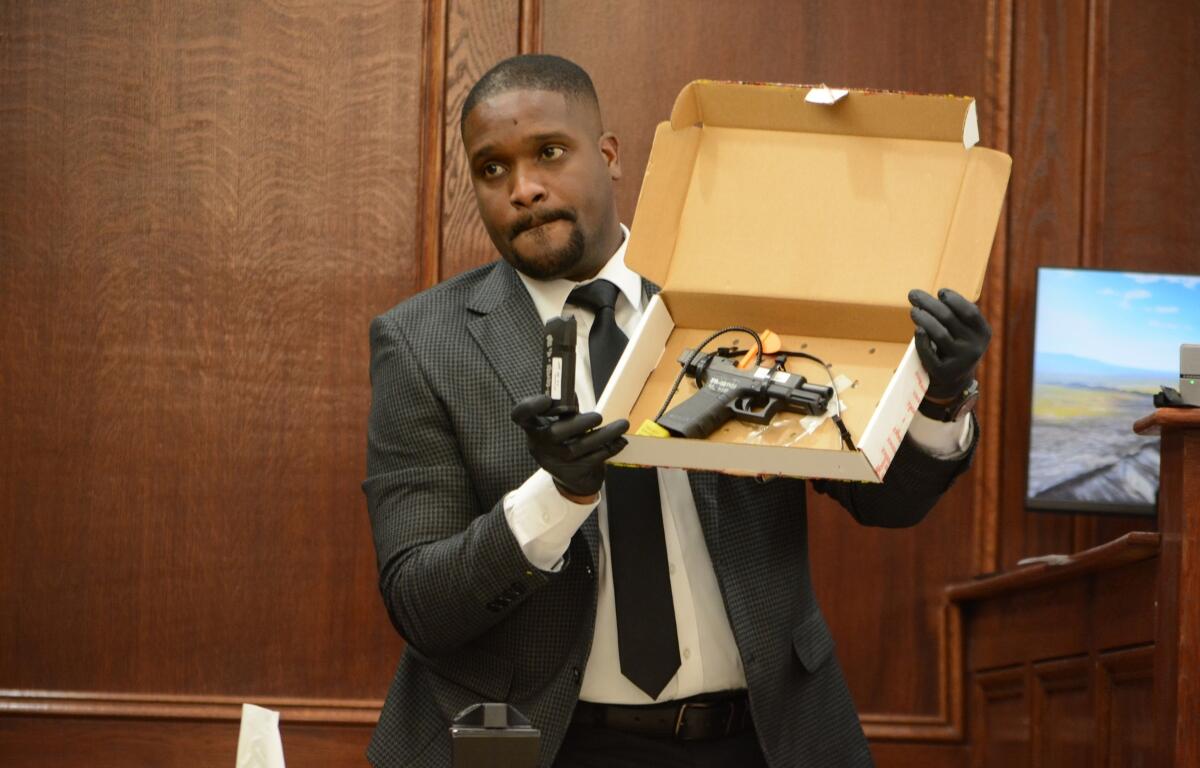
Jurors were shown many more photos of the crime scene and the evidence collected. Beaubien said they recovered four cellphones from the scene. He also recovered a 9 mm Glock that had already been dismantled and the loose magazine from the dining room table. Beaubien testified that the gun was “covered in RBS” (reddish-brown stains) and jurors were shown pictures where RBS could be seen coming out of the magazine well. He noted there was an Alexa device in the kitchen with a camera, but the slider was closed, and a Ring camera in Rachel’s bedroom.
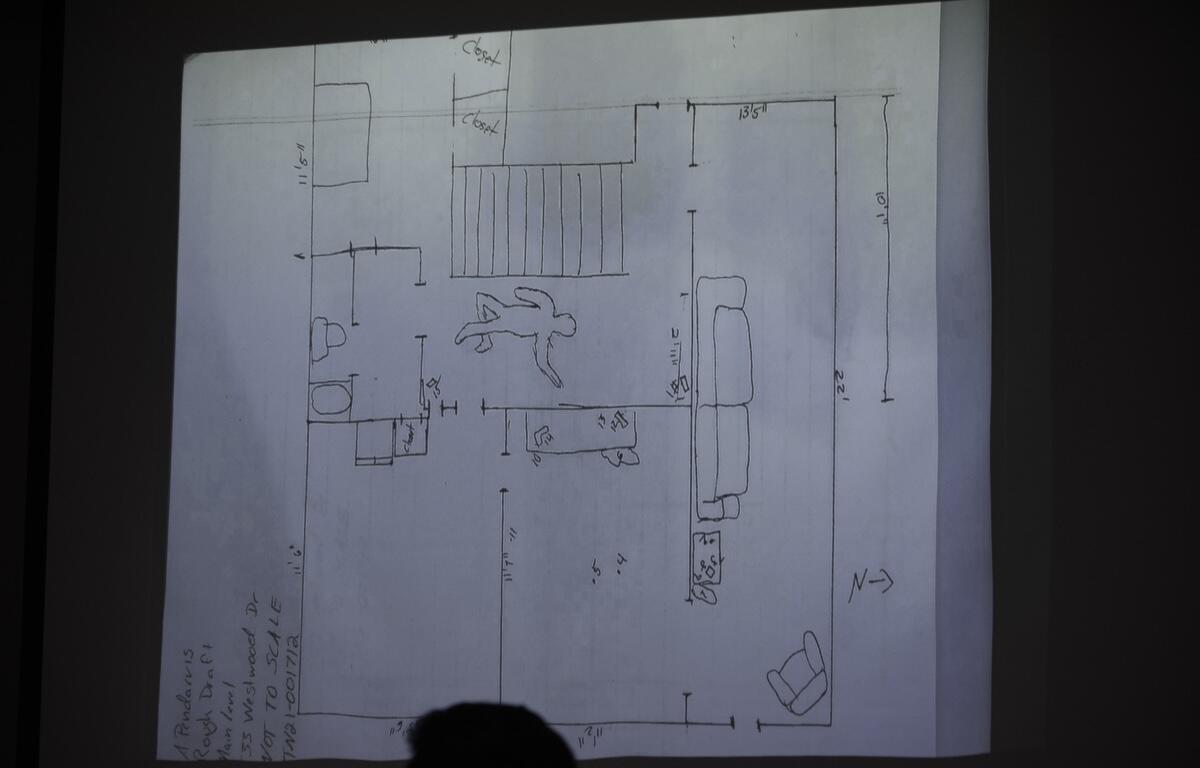
Detective Allen Pendarvis also responded to the scene that night with CSU and was tasked with sketching the crime scene.
Agent Xavier Greaves worked the scene as a crime scene technician and helped collect evidence. Greaves recovered a casing and two loose bullets from the dining room, as well as a projectile that had gone through the hallway wall and down into the basement.
2. Medical examiner
Dr. Erin Carney, an expert in forensic pathology with the Center for Forensic Medicine, testified about the injuries both victims sustained. Carney told jurors the bullet that struck Rachel went through her back, hit her spine, and went “through her heart.” Her cause of death was “gunshot wound of the torso.”
| SHARE YOUR NEWS: Email your news releases to news@clarksvillenow.com
Rodgers’ cause of death was “blunt force injuries of the head.” Carney described his face as “very bloody,” with significant bruising, swelling and multiple fractures. She said his left eye was “completely collapsed,” he had fractured teeth, and “the whole middle of his face was sunken in.”
Carney told jurors Rodgers also suffered from brain bleeds stemming from three sources — one at the top of the brain and a subarachnoid hemorrhage on both sides. “All of that worked together to cause his death,” she said.
3. Ring camera and 911 audio capture victims’ final moments
Jurors viewed footage from the Ring camera in Rachel’s bedroom from the day she and Rodgers died. The camera appeared to be motion and sound activated, with gaps in recording. Around 3:58 p.m., Rachel can be seen packing for her trip. At about 4:26 p.m., Rodgers is seen entering the room while playing with three of his grandchildren. Rachel continues packing throughout the evening and is last seen at about 6:22 p.m. moving her bags.
Jurors also heard the 911 call placed at about 6:42 p.m., where Konen is heard yelling for “help” as children scream in the background. Konen tells the operator that Rodgers shot his wife and tried to shoot him, so he “pistol-whipped him.” He also mentions running outside to grab his medic bag from the car and beginning CPR.
4. Divorce attorney, financial adviser outline couple’s financial picture
Nathan Hunt, a Clarksville attorney, testified that he represented Rachel when the couple filed for divorce in November 2020. “This was not one that stuck out,” Hunt said. “It would have been a run of the mill, standard, uncontested divorce.”
Based on the signed agreement, Rachel was going to receive $500 every month in rehabilitated alimony through August 2025. A $28,000 life insurance policy was also taken out on Konen with Rachel as the beneficiary to secure the alimony. Konen also agreed to pay off Rachel’s car and insurance, transfer half of his retirement within 180 days of the divorce being finalized, and continue paying her health insurance until she could obtain her own.
| MORE: 3 takeaways in trial of former paramedic accused in 2021 deaths of wife, father-in-law
Their parenting plan gave Rachel 315 days with the children and Konen 50, though they still lived together at that time. Hunt added Konen was also going to pay $1,677 a month in child support. While going through the divorce process, they sold their former home and closed on the Westwood Drive home together. “Very unusual that parties in a divorce would be buying real estate at the time they were getting divorced,” he said. Hunt told jurors they bought it as “tenants in commons,” each with 50% interest. He said the divorce would have been finalized in mid-February and was dismissed after Rachel’s death.
Rodrick Butler, a financial adviser with Northwestern Mutual, testified that he knew Rachel for “most of her life.” Butler told jurors they attended church together and his wife was Rachel’s youth pastor. He said he reached out to Rachel in 2018 to offer financial services but she did not express interest until reaching back out to him in January 2020.
Butler said they took out a $700,000 life insurance policy on Rachel with Konen as the beneficiary, and a $1 million policy on Konen with Rachel as the beneficiary. He added her policy went into effect in March 2020. Butler told jurors they also did some budget planning. He said Konen’s take-home pay was about $5,300 a month and that they were approximately $350,000 in debt. Butler noted he did not have access to any potential updated finances because financial planning did not continue.
5. Konen describes struggle in police interview
Sgt. Bruce Kilby, lead detective with CPD’s Homicide Unit, testified that he interviewed Konen the night of Rachel and Rodgers’ deaths. Jurors saw portions of a roughly three-hour police interview, which began around 8:57 p.m. and ended around 5 a.m.
On the video, Konen says Rachel was preparing to leave for a ski trip. He said he got home around 6 p.m. and later saw Rodgers walking behind Rachel through the dining room. As she was entering the hallway, Konen said he saw a flash, heard a bang and then she “drops like a sack of potatoes.”
He told officers Rodgers turned the gun on him, he heard a click and he tackled Rodgers to the ground. Konen said while they “wrestled” on the floor for the gun, Rodgers continued trying to pull the trigger. Konen said he pulled the slide back to prevent the gun from firing and started beating Rodgers “until it appeared he was unconscious.” Konen said he then checked on Rachel, ran down to the basement for his phone, called 911, retrieved his medic bag and then began CPR. He said he later returned to Rodgers and kicked him when he was sitting up.
Konen described Rodgers as “incredibly passive” and “empathetic,” and said he believed Rodgers had been struggling with declining mental health and “memory problems.”
Court recessed Tuesday evening and will resume Wednesday at 8:30 a.m. at the Montgomery County Courts Center.
| BREAKING NEWS PUSH ALERTS: Sign up for our free Clarksville Now app