


CLARKSVILLE, TN (CLARKSVILLE NOW) – After nearly five days of testimony from about 26 witnesses, the trial for the divorced couple charged in the 2024 stabbing death of a Fort Campbell soldier was declared a mistrial Tuesday afternoon.
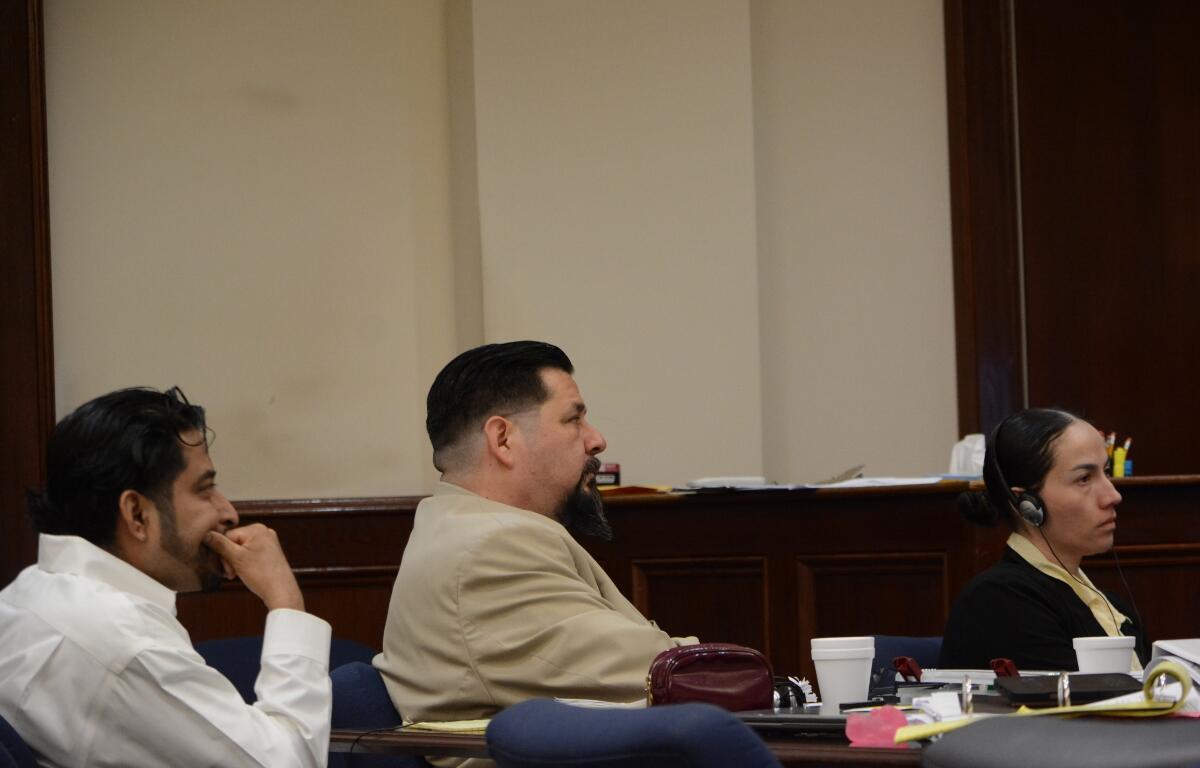
Sofia Rodas, 37, and Reynaldo Salinas-Cruz, 41, had been indicted in the stabbing death of Salinas-Cruz’s wife, according to previous reports. Court records show Rodas was charged with first-degree murder, and both were charged with tampering with evidence. Both defendants pleaded not guilty to all charges.
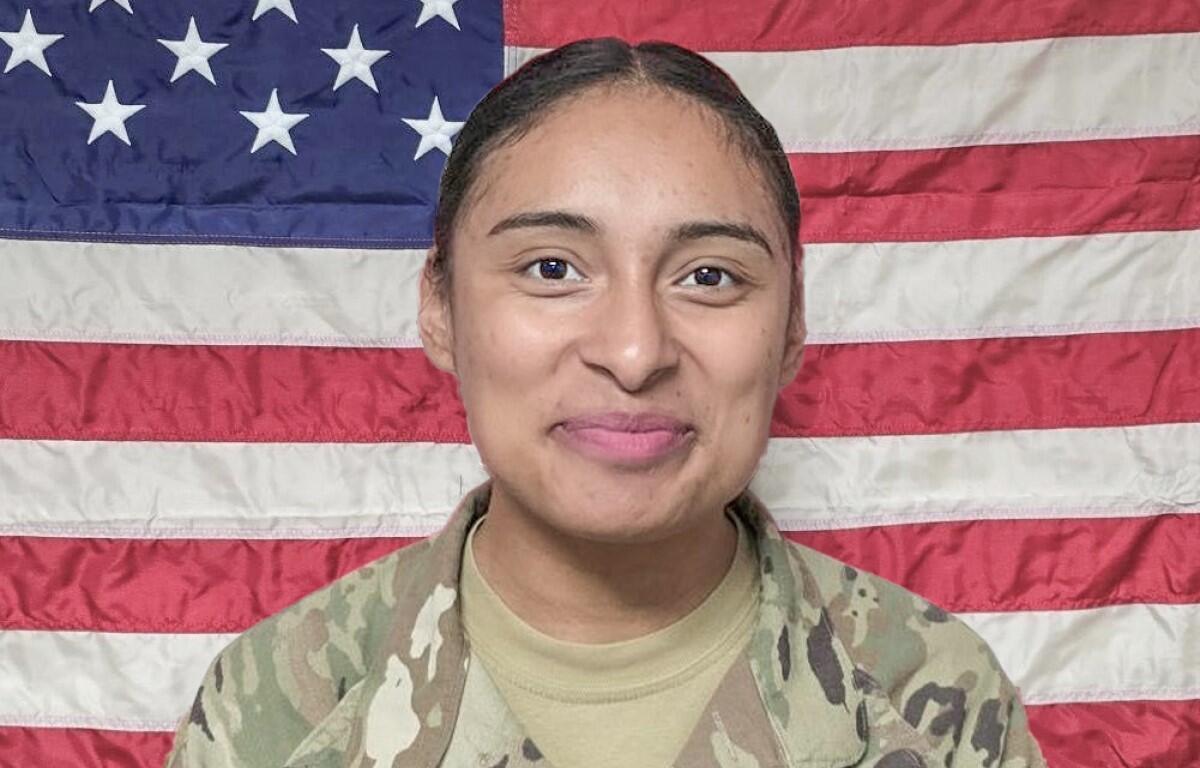
The victim was 23-year-old Pfc. Katia Dueñas-Aguilar of Mesquite, Texas – just east of downtown Dallas.
Last week, jurors heard testimony about Dueñas‑Aguilar’s final hours, including surveillance footage of her movements on and off Fort Campbell, witness accounts from friends who were with her the night before her death, and expert findings detailing at least 68 sharp‑force injuries. Investigators also walked jurors through blood‑pattern evidence from the apartment where she was found, and toxicology results showing a 0.161 BAC. Her former roommate, Miranda Wadsworth, testified that she discovered Dueñas‑Aguilar’s body in the walk‑in closet of her old bedroom on the night of May 18, 2024.
Before the mistrial was declared, jurors on Monday and Tuesday heard testimony about Dueñas-Aguilar’s state of mind in the weeks leading up to her death, along with DNA analysis and additional evidence.
Friend says victim was worried in weeks before death
Spc. Evelin Mejia, a supply specialist for the U.S. Army, testified that she met Dueñas-Aguilar at a field event in January 2024 and they became friends. “She was very outgoing, always laughing,” she said. “She was very caring.”
Mejia said she knew Dorian Miller, who was dating Dueñas-Aguilar. On May 11, 2024, Dueñas-Aguilar and Mejia went to a Bad Bunny concert in Nashville. About one week before the concert, she said Dueñas-Aguilar was worried. “She was worried because she had mentioned she went out with her friend Sofia, and Katia had told her that Sofia’s boyfriend seemed interested in Katia,” she said. “Katia said she was married to Sofia’s boyfriend – a contract marriage for citizenship.”
| NEWS ALERTS: To get free breaking news alerts on your phone, text the word NEWS to 43414.
Mejia said she was shocked to learn of the contract marriage and that, to her knowledge, Dueñas-Aguilar wanted to be with Miller. She added that Dueñas-Aguilar told her “Sofia seemed angry” and that although she apologized to Rodas to smooth things over, “she was still worried.”
She also told jurors she was texting Dueñas-Aguilar on the night of May 17, 2024. Jurors saw messages where Dueñas-Aguilar spoke of plans to “break it off” with Miller.
No ‘interpretable’ DNA or prints from defendants at scene
Agent Christine Tarallo, a forensic biologist with the U.S. Army Criminal Investigations Laboratory (USACIL), testified that Rodas and Salinas-Cruz were “excluded as a contributor on all the interpretable results” from DNA swabs collected at the crime scene.
Tarallo told jurors several samples collected from the Tiny Town Road apartment included mixtures of multiple DNA samples, some from the occupants of the residence, some from unknown sources and some that were inconclusive. There was a DNA sample from the handle of the murder weapon that was also inconclusive. She said “nothing can be said of inconclusive results” and that she “cannot include or exclude” any DNA profile.
| NEWS TIPS: Do you have a local news tip? Email news@clarksvillenow.com or call us at 931-648-7720.
Monika Garcia, latent print examiner with USACIL, testified that she examined seven latent prints found on the wall in the walk-in closet where Dueñas-Aguilar was discovered. Rodas and Salinas-Cruz were excluded from all prints, except for those deemed “inconclusive.”
“It is possible for you to touch something and not leave a print behind,” she said. Garcia added this could be for many reasons: hands that are too dry or too wet, protective gear on hands like gloves, environmental exposure, and surfaces being wiped or cleaned. “There could be a multitude of reasons why,” she said, “but I cannot tell you specifically.”
Investigators describe damaged window, murder weapon discovery
Detective Joshua Clegg with the Clarksville Police Department testified that he responded the Tiny Town Road apartment on the night of May 18, 2024, as a crime scene technician. “When I arrived at the apartment … the upstairs window had like a hole in the screen and the actual screen appeared to be pushed out some,” he said, adding the gutter was damaged and there was hand cream in the mulch out front.


Clegg told jurors he also discovered the murder weapon while pulling knives out of the knife block in the kitchen. Additionally, he used a luminol test – which produces a bright blue glow when in contact with blood – on different surfaces to reveal trace amounts of blood around the home. He also recovered Dueñas-Aguilar’s cellphone, which Wadsworth previously testified she found outside on the ground, still plugged into the charger before moving it inside.
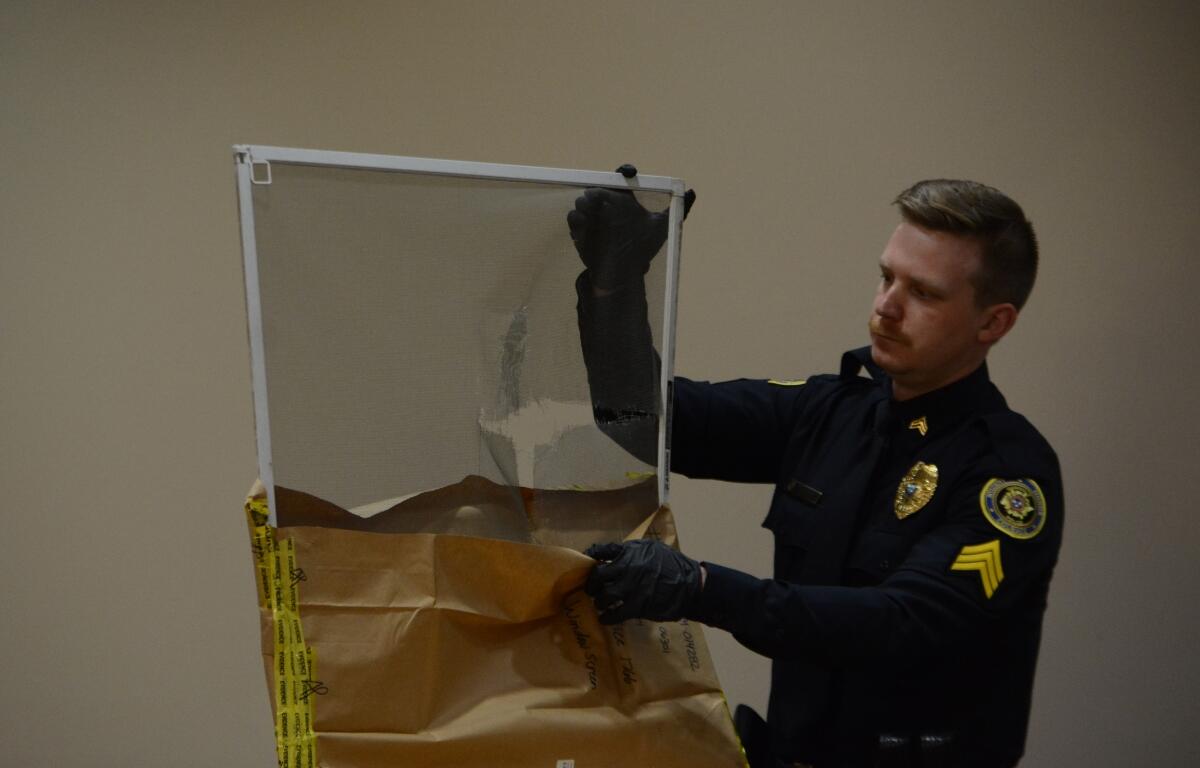
Sgt. Adam Price also processed the scene as a crime scene technician the night Dueñas-Aguilar was discovered deceased in her walk-in closet. He showed jurors the damaged screen from Dueñas-Aguilar’s old bedroom. Price said he also discovered Dueñas-Aguilar’s Visa card lying on the exterior windowsill outside her bedroom window, positioned on the outside ledge.
What led to mistrial?
Cheryl Cooke, Wadsworth’s mother, testified that her daughter and Dueñas-Aguilar were working single moms living together to help each other. “It would be hard for Miranda to find a job because she was always watching Kat’s little boy all the time,” she said, adding Wadsworth also has intellectual disabilities.
Cooke told jurors she was not surprised that Wadsworth called her first before 911 after discovering Dueñas-Aguilar’s body. “Miranda’s whole life, anything that’s ever happened, she calls me first,” she said. During her testimony, Cooke revealed she took her grandchildren to get a forensic interview done following Dueñas-Aguilar’s death.
After hearing this, Chief Deputy District Attorney General Marianne Bell said she contacted the Child Advocacy Center and discovered that forensic interviews had in fact been conducted in August 2024 at the request of a federal prosecutor. “The state has not even had the opportunity to watch those forensic interviews, nor were they ever sent to the state’s detective in this case,” she said.
Bell added they were not notified about the interviews and had no prior knowledge of them. “There was no notification in any of the files,” she said. “In fact, Detective Hofinga tried to arrange one right after the crime occurred and that was not able to be arranged. So her understanding was that they did not ever go to get a forensic interview.”
Defense attorney Byron Pugh, representing Rodas, made a motion for a mistrial. “The basis is just finding out about this new evidence and not having an opportunity to conduct an adequate investigation,” he said. Defense attorney Stephanie Ritchie-Mize, representing Salinas-Cruz, also called for a mistrial, citing that the newly discovered forensic interviews could contain “exculpatory information.”
Judge Robert Bateman declared the mistrial. “Without knowing the contents of the forensic interview but knowing the subject matter of it and the fact that it had not been disclosed to counsel until well into the trial … the court finds there is a manifest necessity to grant a mistrial in this case,” Bateman said.
A status hearing has been set for Oct. 7 at the Montgomery County Courts Center, and the trial will be rescheduled at a later date.
| BREAKING NEWS PUSH ALERTS: Sign up for our free Clarksville Now app