


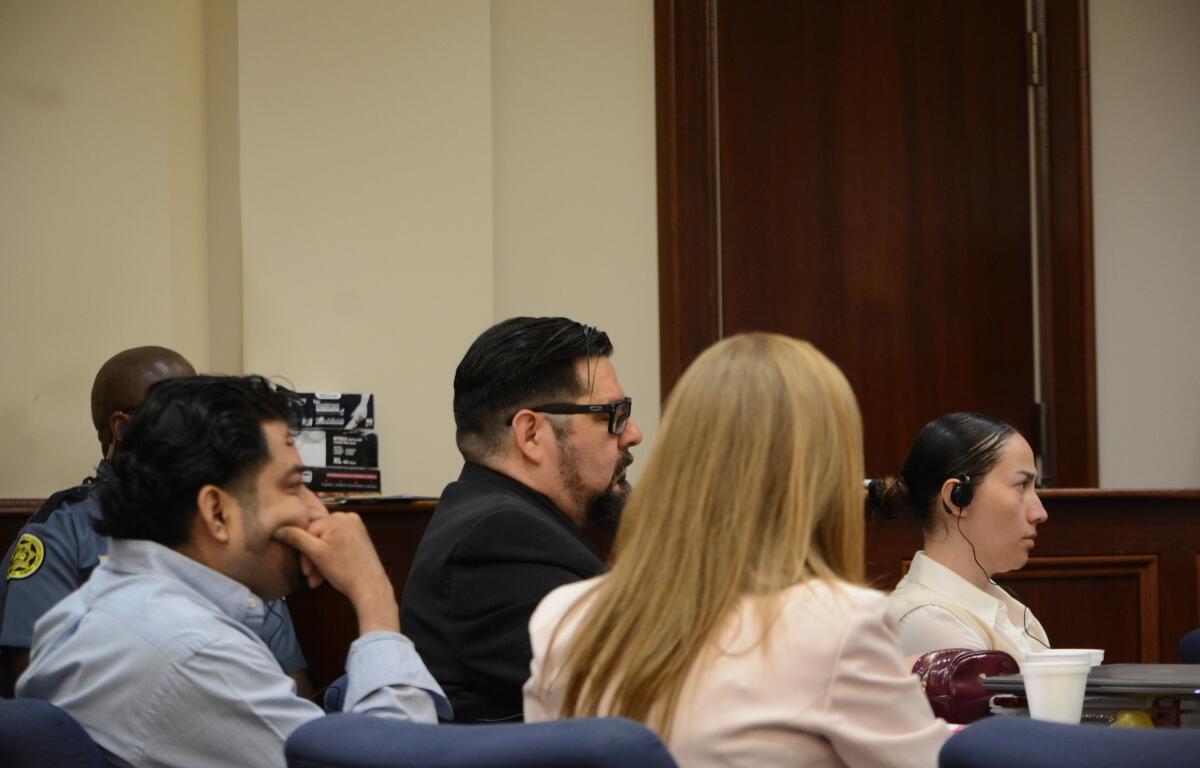

CLARKSVILLE, TN (CLARKSVILLE NOW) – The trial began Tuesday and continued Wednesday for the divorced couple charged in connection with the 2024 stabbing death of the man’s new wife, a Fort Campbell soldier.
Sofia Rodas, 37, and Reynaldo Salinas-Cruz, 41, were indicted by a Montgomery County grand jury in December 2024 in the stabbing death of Salinas-Cruz’s wife, according to previous reports. Court records show Rodas was charged with first-degree murder, and both were charged with tampering with evidence.
Both defendants pleaded not guilty to all charges.
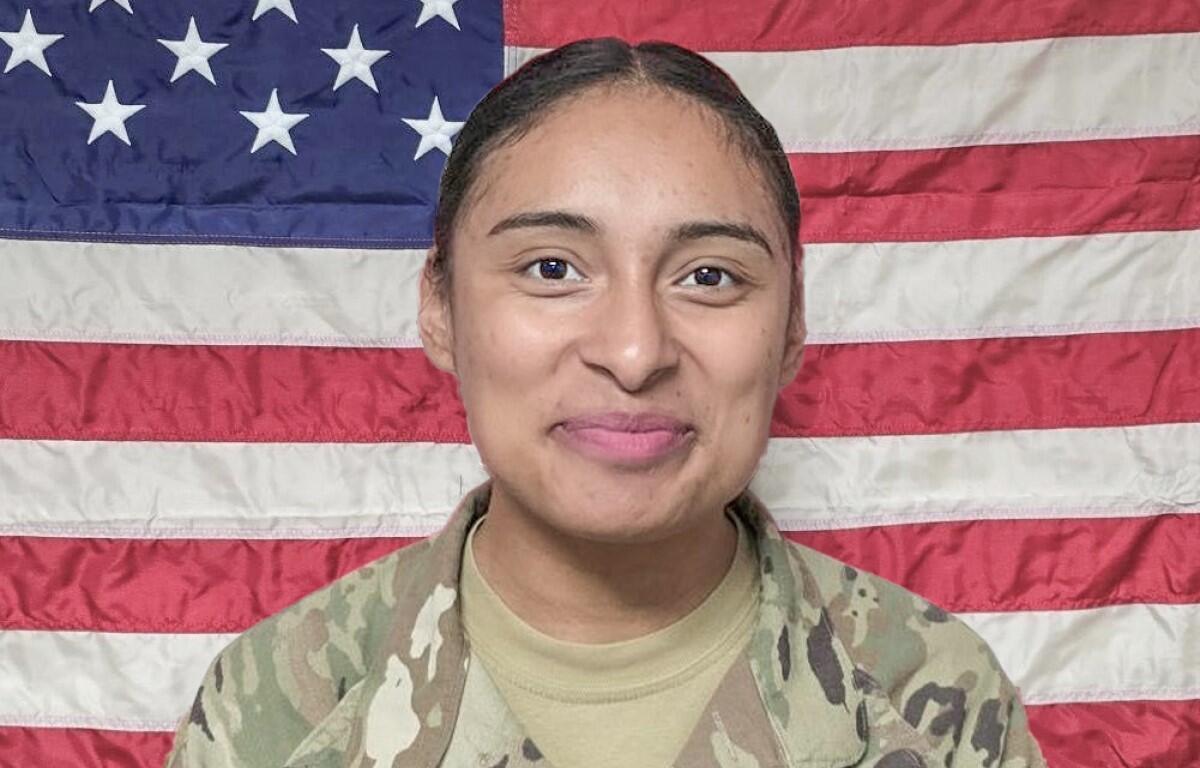
The victim was 23-year-old Pfc. Katia Dueñas-Aguilar of Mesquite, Texas – just east of downtown Dallas. Dueñas-Aguilar entered the active-duty Army as an information technology specialist in 2018 before reporting to Fort Campbell in 2019, according to previous reports.
Police find soldier with over 60 stab wounds
On the night of May 18, 2024, Clarksville Police responded to an ambulance call at a residence on Tiny Town Road, where they found Dueñas-Aguilar deceased, according to previous reports. The autopsy revealed she was stabbed to death, with at least 68 wounds.
In October 2024, Salinas-Cruz and Rodas were in federal custody on separate marriage fraud charges. According to previous reports, Salinas-Cruz and “Sophia” Rodas married each other in May 2020 – with her first name spelled differently on that document – before divorcing in December 2022.
The indictment returned by a U.S. grand jury said, in addition to his marriage with Rodas, Salinas-Cruz married a different woman to evade immigration laws on Oct. 6, 2023, the same day he married Dueñas-Aguilar, according to previous reports. Following a true bill indictment related to Dueñas-Aguilar’s murder, they were extradited back to Clarksville in February 2025.
Both are now standing trial for the charges connected to Dueñas-Aguilar’s death.
Prosecution details alleged motive, opportunity
Assistant District Attorney Dillon Barker told jurors Rodas exploited Dueñas-Aguilar’s trust before killing her. “She befriended her, she used her, she killed her,” Barker said. “The proof in this case will show that Sofia Rodas took a young soldier’s trust, took her benefits and took her life.”
| NEWS ALERTS: To get free breaking news alerts on your phone, text the word NEWS to 43414.
He said on the evening of May 17, 2024, Rodas, Dueñas-Aguilar, and another friend went to a restaurant on Riverside Drive. He said Rodas ordered “shot after shot after shot” and eventually ordered an “entire bottle of tequila.”
Barker said the evidence will show that Rodas brought Dueñas-Aguilar back to her old apartment – which she had moved out of a few days prior – later that evening and was there for an hour and a half. “There is no evidence that anyone but Sofia saw Katia alive after she left (the restaurant) with Sofia,” he said.
Barker said Dueñas-Aguilar’s former roommate discovered her the following evening in the closet of her old bedroom. He added that there was deleted communication between Rodas and Salinas-Cruz during a “critical time-frame,” and that text messages will reveal Rodas began expressing animosity toward Dueñas-Aguilar in the weeks leading up to her death. He noted that Rodas and Salinas-Cruz still lived together following their divorce. He said Rodas “asked Dueñas-Aguilar to help get legal status for Salinas-Cruz by marrying him” and that she used Dueñas-Aguilar’s legal status to “help her get her new restaurant off the ground.”
Defense challenges state’s theory as circumstantial
Defense attorney R.D. Norris, representing Rodas, told jurors the state’s theory does not align with the evidence. “All throughout this trial, I want you to just remember one thing: Does that make sense?” he said.
Norris said they would hear about “relationships, money, marriages, immigration, benefits, bank accounts” and “years of history” between the three of them. “This is a circumstantial case and circumstantial evidence can be strong, but like we talked about yesterday, they have to fill in the gaps,” he said.
Norris said the investigation shifted when they found out Rodas and Salinas-Cruz were previously married and that Rodas told investigators when interviewed the following day to check the cameras.”This is not a trial about the way Sofia lived her life,” he said. “You can’t find her guilty of murder because her social life and relationships were messy,” he said.
Defense attorney Stephanie Ritchie-Mize, representing Salinas-Cruz, said he was from a small rural town in Mexico and started working full-time in sixth grade to support his family. Ritchie-Mize added that he traveled to America at 17 years old, eventually opened his business and helped employ others who had “no education and no job opportunities.”
She told jurors the split between the defendants was amicable and they remained friends. “He admits he was engaged in a sham marriage to gain citizenship,” she said. “He will eventually be deported because of that. But what you are not going to hear is one tiny shred of evidence that he did anything associated with this murder.”
Victim’s mother, friend detail last contact with her
Carmen Aguilar, Dueñas-Aguilar’s mother, told jurors her daughter “always wanted to help people” and that it was her dream to serve her country. She described her daughter as a “very strong woman” and a very trusting person.
Aguilar said in February 2024, Dueñas-Aguilar expressed a desire to leave the Army and move back to Texas. She said started planning but in April 2024, they “didn’t have the same contact anymore.” On May 19, 2024, Aguilar said she received a call from Salinas-Cruz informing her of her daughter’s passing, although she was unaware of their marriage prior to this. “He told me I needed to come here and help him quickly,” she said, adding her grandson was with him.
| SHARE YOUR NEWS: Email your news releases to news@clarksvillenow.com
She testified that when she met Salinas-Cruz for the first time on post, “he was very focused on the benefits” while all she wanted was to see her daughter. She noted it was strange that her daughter’s belongings had been moved from her apartment to Salinas-Cruz’s home a few days before her passing.
Dorian Miller, a friend Dueñas-Aguilar was romantically involved with, met her in July 2023 while serving in the same unit as her at Fort Campbell. Miller said in January 2024, they began getting to know each other more outside of work. He said he was on post May 17, 2024, when he received a Facetime call from Dueñas-Aguilar. Miller added from what he could see, he assumed she was in the bathroom and knew she had been “out with friends drinking.” He said she seemed intoxicated on the call and when he responded to a text from her later that evening, the message was green even though they both had iPhones, so he assumed her phone had died. He added she was unsure whether or not she wanted to re-enlist.
Miller found out about her death on the evening of May 18, 2024, when Dueñas-Aguilar’s former roommate called to tell him the news and ask where he had been because Rodas told her he was the last person with Dueñas-Aguilar, even though he had not been with her.
Victim’s roommate discovers body
Miranda Wadsworth, Dueñas-Aguilar’s former roommate, testified they met as neighbors and became roommates after Dueñas-Aguilar asked her to move in. Wadsworth said Dueñas-Aguilar was struggling to afford a babysitter and started watching her son every day.
While she had a key to the apartment, she said Dueñas-Aguilar used the garage door opener to get in through the garage. Wadsworth also described the first time she met Rodas. “She came to the door, she covered the peephole and identified herself as Katia,” she said.
In March 2024, Wadsworth said Dueñas-Aguilar expressed uncertainty about renewing the lease and asked her to move out. She said they had some disagreements about bills, but were on good terms. On May 14, 2024, Wadsworth said Rodas came by with boxes and helped Dueñas-Aguilar pack up and move out, but a blue bathroom rug and some other personal items were left behind in the empty bedroom.
On the night of May 17, 2024, she said she put her kids to bed around 8:30 p.m. and went to sleep with them, describing herself as a “heavy sleeper” with a box fan on in her room. When she woke up around 6 a.m. the next day, she noticed things were not how she left them. She said a window was cracked and some doors were unlocked with the back door ajar. When she walked outside to smoke a cigarette, she noticed Dueñas-Aguilar’s phone on the ground, still connected to a charger that was plugged into a car adapter and completely dead.
She noticed Dueñas-Aguilar’s car was not there, but tried to see if she was in her old bedroom after realizing the door was now locked. “I did try to knock on her bedroom door,” she said. “I figured she was sleeping, maybe drunk.” She saw she had a missed call from the night before from Rodas and returned the call that morning.
“She said that they went to the restaurant and had drinks, and last that she knew, she was with Dorian that night,” she said.
Wadsworth’s friend invited her and her children out to Cheatham Dam that afternoon and they returned to the apartment around 7 p.m. After eating dinner and hanging out, she went to unlock Dueñas-Aguilar’s old room – thinking she must not be there after not hearing or seeing her all day – and discovered her body in the walk-in closet covered by the blue bathroom rug.
She told jurors she immediately ran outside in shock. Wadsworth tried calling her mother – who she says she calls for everything – tried calling her longtime friend with local law enforcement and then 911. “I felt like my heart was going to come out of my chest,” she said through tears.
Court recessed Wednesday evening and is scheduled to resume Thursday at 8:30 a.m. at the Montgomery Courts Center.
| GET YOUR LOCAL MORNING NEWS: Sign up for our free daily email newsletter.