



Clarksville Now publishes opinion pieces representing both sides of a variety of topics. Opinions presented do not necessarily reflect those of the newsroom or management. To join the conversation, email your opinion piece to news@clarksvillenow.com.
Contributed commentary by Karen England on the Clarksville-Montgomery County School Board:
I am writing to express my disappointment regarding several decisions made by the Board at this week’s meeting.
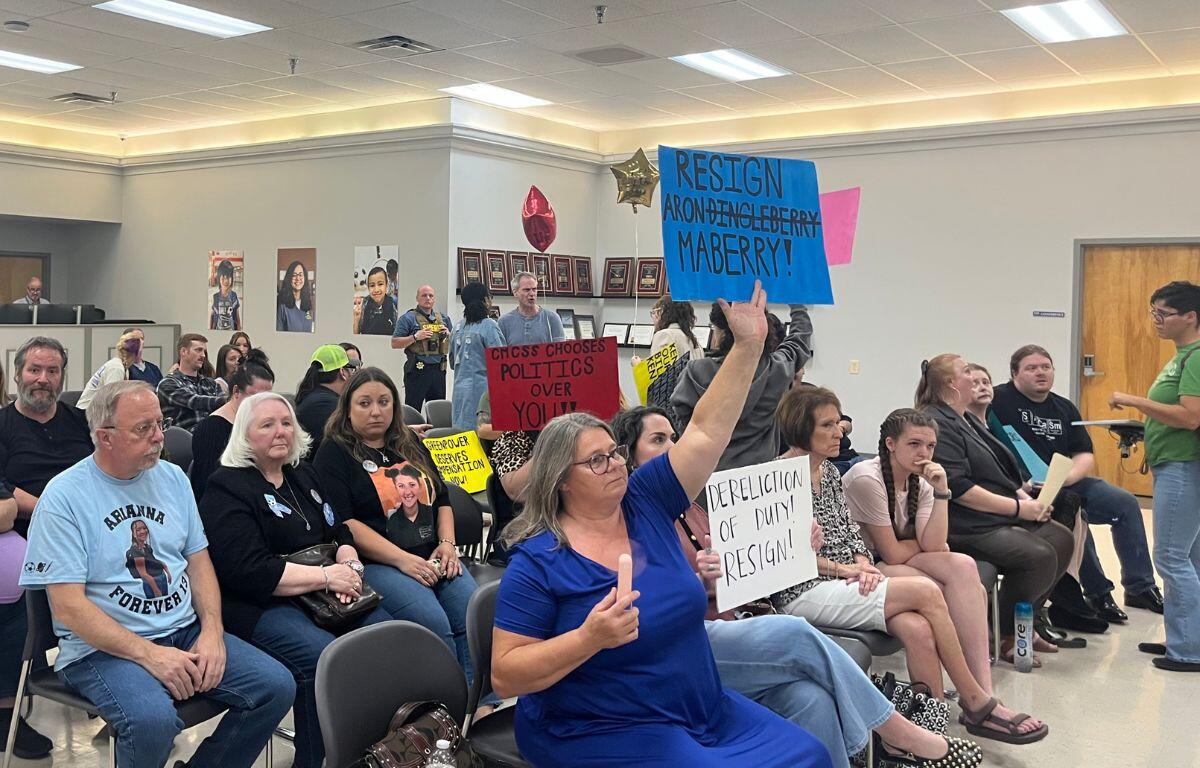
I will begin with the removal of the entire audience from the meeting. I understand and agree that when individuals are disruptive, are warned, and continue their disruptive behavior, removal may be necessary. My concern is that the Board chose to remove all members of the public, including those who were not being disruptive. This action reinforces a larger concern I have: that this Board continues to disregard both the spirit and letter of Tennessee’s open meetings laws.
| PREVIOUSLY: Public removed from School Board meeting after emotional comments from crash victim’s mother, Vedder victim
There have been several recent examples of this behavior. While there are many instances that could be discussed, I will focus on those that have occurred within the last few months.
First, at the May 19 meeting, I asked whether any board member would make a motion to allow Mrs. Ellithorpe to use my allotted speaking time. It is perfectly acceptable for the Chair to confer with legal counsel or a parliamentarian. However, the moment Mr. (Aron) Maberry left his seat to privately confer with Mr. (Chris) Lanier through whispered conversations that were neither conducted at the microphone nor preserved in the public record, or minutes, concerns arise regarding transparency and compliance with open meeting requirements.
Proposal voted on without prior notice
Second, at the June 16 meeting, the Board voted on an item that had been placed on the consent agenda despite never having received a proper first reading or public consideration. The item should not have been voted on at that meeting and should have remained pending until a future formal meeting after appropriate notice and public review.
I recognize that Mr. Maberry stated he had discussed the issue at a prior meeting. However, mentioning a proposal during Board Member Comments is not the same as placing it on a properly noticed agenda item for discussion and first reading. The proposal never appeared as an agenda item for a first reading and was not made available to the public until June 14. Therefore, I am left wondering who drafted the policy and whether any discussions occurred among board members outside of a properly noticed public meeting. I believe that vote should be void. The item needs to be agenized as a first reading and then it can be voted on at the next meeting.
You are a governmental body and are bound by laws designed to ensure transparency and public trust.
Consider the following hypothetical example. If a city council member mentioned during general comments that he wanted to pursue a 5-cent tax increase and was working on bringing it forward, and then at the next city council meeting that proposal appeared on the consent agenda, was pulled from consent, and immediately voted upon without prior notice or a first reading, I believe most citizens would be outraged. Yet that is essentially what occurred here.
Should be ‘School Board 101’
What is perhaps most troubling is that none of these concerns involve complicated legal theories or obscure procedural requirements. These are basic principles of public governance, transparency, due process, and school board operations – what many would consider ‘School Board 101.’ By 2026, I am astonished that CMCSS continues to struggle with such fundamental requirements. Citizens should not have to repeatedly explain open meetings laws, agenda procedures, public participation rights, and statutory obligations to the very officials entrusted with governing our schools. The continued disregard for these basic standards creates the appearance of either a lack of understanding of the Board’s legal responsibilities or an unwillingness to follow them. Neither explanation inspires public confidence.
The taxpayers and citizens of CMCSS are not subjects of this Board. We are citizens with constitutional rights, including the First Amendment right to address our government and express our grievances to our elected officials and governing bodies.
Transparency, accountability, and adherence to the law are not optional for public bodies. They are essential to maintaining public trust. I urge the Board to recommit itself to these principles moving forward.
Karen England, Clarksville resident and president at Capitol Resource Institute