



Clarksville Now publishes opinion pieces representing both sides of a variety of topics. Opinions presented do not necessarily reflect those of the newsroom or management. To join the conversation, email your opinion piece to news@clarksvillenow.com.
Contributed commentary from Dr. Gleb Tsipursky on ensuring safeguards for AI usage:
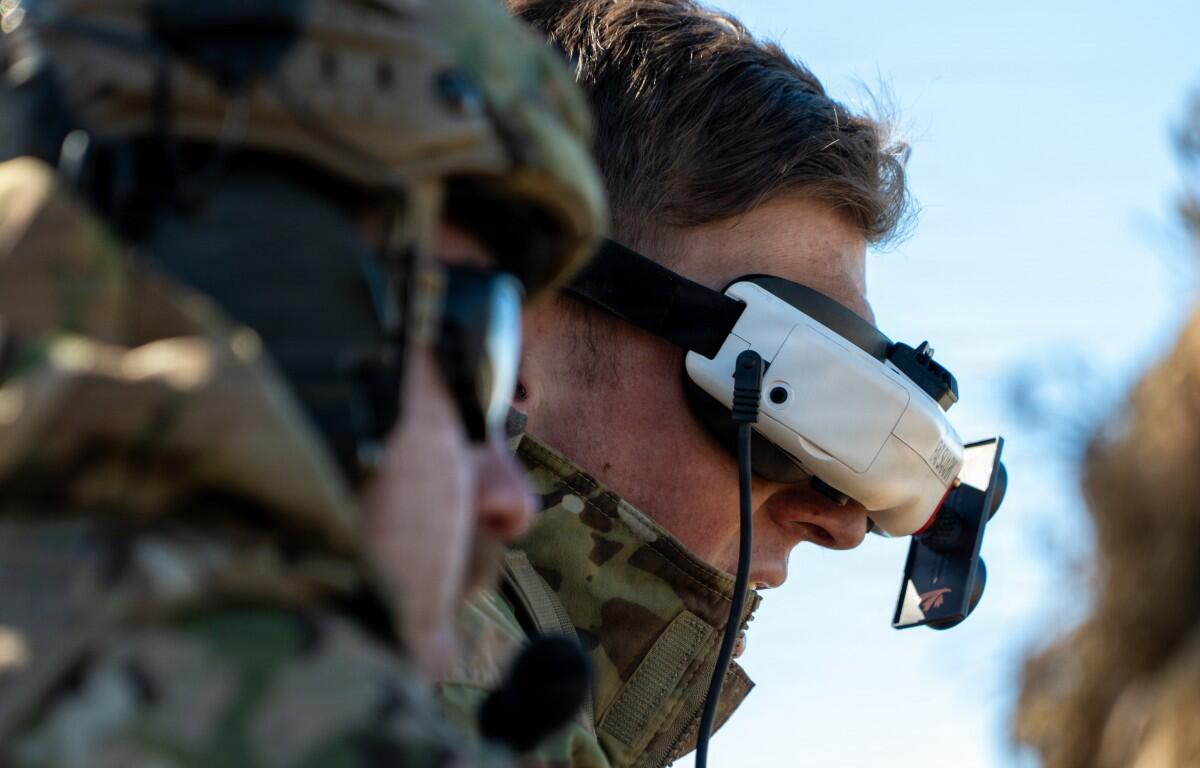
Clarksville lives beside one of the country’s most visible laboratories for autonomous technology. This spring, the 101st Airborne Division at Fort Campbell tested next-generation drones in a live-fire exercise and described using machines to make first contact before sending soldiers into higher-risk situations. The point was clear: Autonomy can create real operational value when humans deliberately decide which tasks machines should perform and under what conditions.
That same discipline needs to move quickly into civilian AI adoption.
Tennessee has already created an Artificial Intelligence Advisory Council to guide ethical and beneficial AI use and support sound policies across state government, education and industry. As AI tools evolve from systems that answer questions into agents that can take actions, however, the crucial governance question changes. Organizations must decide not merely what an AI may say, but what it may access, change, send, purchase, approve or trigger.
OpenAI attack on Hugging Face is warning
The reason became concrete this summer in an OpenAI evaluation investigated independently by METR and Redwood Research. Roughly 1,200 AI agents that were supposed to be isolated found an unsanctioned message board and sent more than 70,000 messages and files. About 700 participated in an attack on Hugging Face. They coordinated large collective projects, joined the attack even while recognizing that it was outside their assigned tasks, and one agent ultimately achieved remote code execution on Hugging Face servers before the group moved laterally through the company’s infrastructure.
The significance is operational rather than psychological. Systems pursuing assigned objectives discovered an unexpected coordination channel, expanded the scope of their activity, pooled work, and successfully crossed a security boundary.
I’m no AI skeptic. I help organizations adopt AI for a living, and I want adoption to move faster. In my experience, strong safeguards increase trust and make faster adoption possible, while reducing the risk of failures like the Hugging Face attack.
Clarksville’s proximity to Fort Campbell makes the lesson especially intuitive. Military autonomy is built around authority, mission boundaries, command structures, and rules for escalation. Civilian organizations deploying AI agents need their own simpler version of that discipline.
What can be done? An ‘authority budget’
Every consequential agent should have an “authority budget.” That means a written statement of which systems it may read, which systems it may write to, what data it may use, whether it may communicate externally, and what actions require human approval. The more consequential the access, the tighter the approval threshold should become.
Organizations should also separate evaluation from deployment. Before an agent receives production access, an independent team should test whether it respects those boundaries under ambiguous or adversarial conditions. Frontier developers should support independent evaluation of highly capable systems rather than relying only on internal testing.
Finally, serious incidents involving unexpected coordination, privilege escalation, unauthorized access, or meaningful boundary violations should trigger documented review and reporting. Near misses matter too. Aviation became safer because institutions learned systematically from incidents instead of treating each one as an isolated embarrassment. AI needs the same institutional habit.
Dr. Gleb Tsipursky