


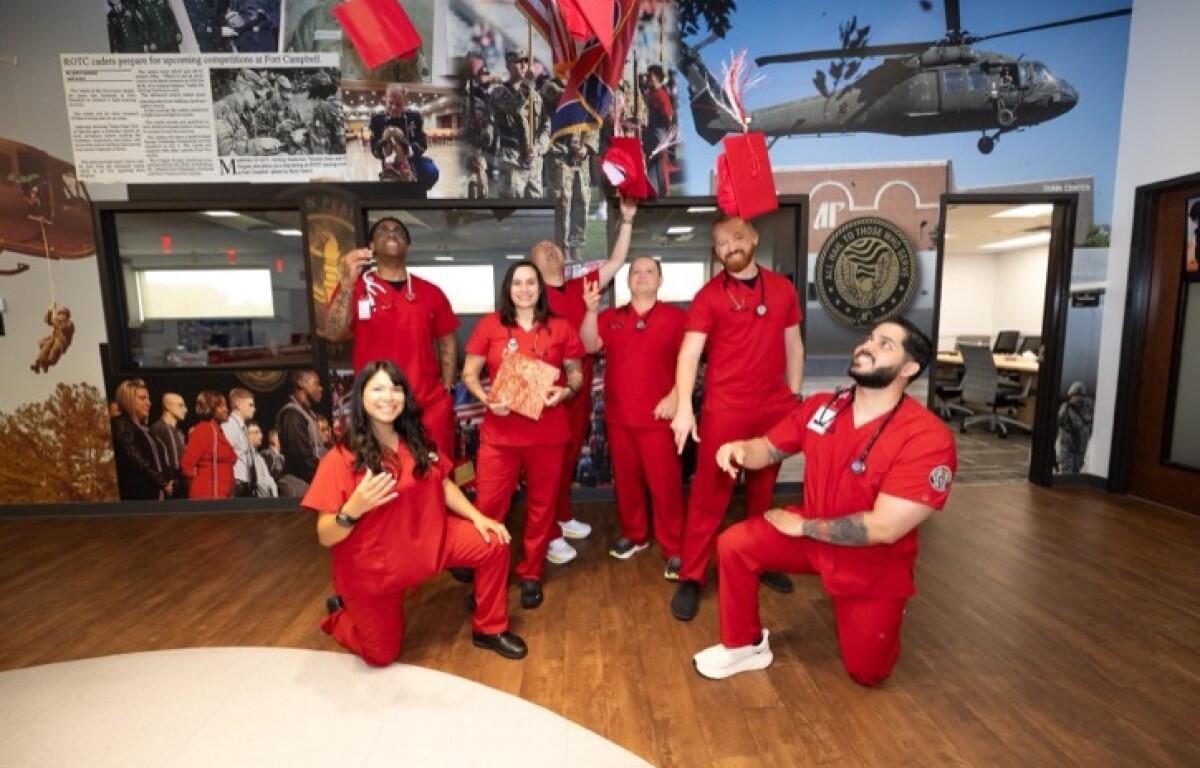

CLARKSVILLE, TN – For students preparing to serve as nurses in the U.S. Army, the path is anything but simple. It requires academic excellence, military readiness, and selection into one of the Army’s most competitive commissioning pathways.
Increasingly, it also leads them to Austin Peay State University.
Through the Army Medical Department’s enlisted commissioning pathway, soldiers selected for a Bachelor of Science in Nursing (BSN) must find a program that meets rigorous academic standards while supporting the realities of military life. According to internal data shared by AMEDD, 32 of the 50 soldiers selected nationwide chose APSU’s School of Nursing in 2024—a number that reflects more than proximity or affordability. It reflects reputation.
“The first years I received the AMEDD preferred school list, I thought it was listed alphabetically with Austin Peay at the top,” said Ruth Trotter, AMEDD clinical advisor for APSU’s School of Nursing. “But after a couple years, I realized our being at the top of the list had nothing to do with the alphabet.”
That reputation has developed through more than a decade of partnership between APSU and the Army. What once brought a few soldiers to campus at a time has grown into a steady pipeline, fueled by strong outcomes, word-of-mouth, and a support system built specifically for them.
To qualify for the program, nursing schools must maintain consistently high outcomes, including NCLEX pass rates above 90%. APSU has exceeded that benchmark, averaging a 97% pass rate for the past three years.
But numbers alone don’t explain why soldiers choose to come, and to stay.
Finding the right fit
For Sgt. Leon Britton, a first-generation college student from the Bronx, New York, the decision came down to something simpler: clarity.
“I applied to eight other colleges and got into all of them,” Britton said. “Austin Peay was one of my top two, but it was also the easiest in terms of understanding what needed to be done. They had timelines. They communicated. From day zero, they were on it.”
That level of support is by design.
Trotter works with prospective students as early as 18 months before they arrive on campus—fielding calls from soldiers stationed around the world, helping them navigate prerequisites, timelines, and a selection process based on Army needs and academic readiness.
At any moment, she may be advising over 100 prospective applicants.
“It’s a bit like a match,” she said. “I know their academic side, but the Army is making decisions based on their needs. So we’re working together to find the right fit.”
That guidance, paired with a responsive and personal program, has become one of APSU’s defining strengths.
Built for service
Once on campus, students enter a program shaped by rigor and intention.
“I came in thinking I was just going to check a box and move on,” Britton said. “But I found more than that. I found a family here.”
Britton, who will graduate this month with his BSN, described a learning environment grounded in humility, accountability, and connection—where students learn as much from one another as they do in the classroom.
“You’re surrounded by people you can learn from,” he said. “You realize you don’t know everything, and that’s a good thing.”
That culture extends beyond the classroom and into clinical training. APSU nursing students gain experience in various healthcare settings, including partnerships with major systems like Vanderbilt University Medical Center, Ascension Saint Thomas, TriStar HCA, and regional hospitals and behavioral health facilities.
These placements expose students to everything from trauma-level emergency care to community-based and mental health services—ensuring they graduate with a wide range of experiences.