


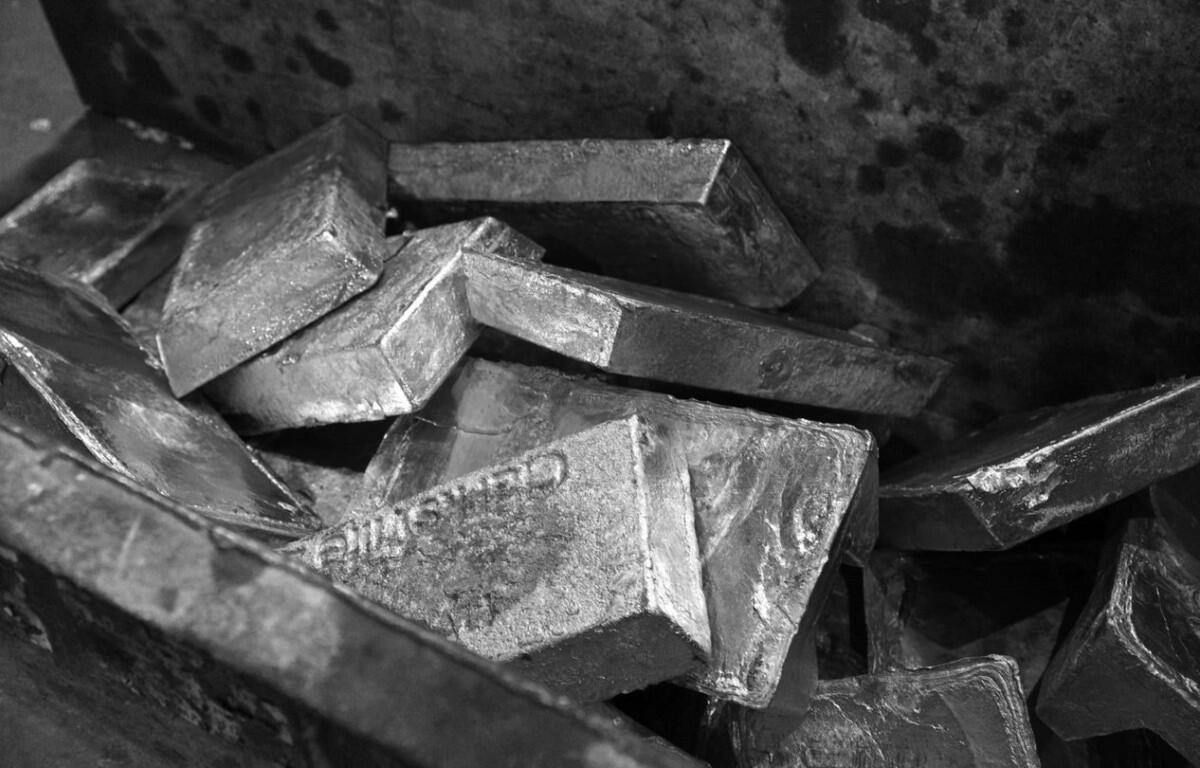

CLARKSVILLE, TN (CLARKSVILLE NOW) – Congressman Matt Van Epps, whose District 7 includes Montgomery County, is co-sponsoring a bill to support critical material processing in the United States. The move could be good news locally, as it comes on the heels of the announcement that Crucible Metals is building a critical material processing plant in Clarksville.
On Tuesday, Van Epps, R-Tennessee, and Rep. Betty McCollum, D-Minnesota, introduced the Critical Materials Future Act, bipartisan legislation would establish a pilot program at the Department of Energy to financially support domestic critical material processing projects, according to a news release.
“Relying on foreign sources for our critical mineral supply is gambling with both our economic and national security,” Van Epps said in the release. “Today, China leads global processing of key critical minerals, refining more than 90% of graphite and nearly all gallium, which are essential to semiconductors and batteries. China also refines more than 90% of rare earth elements used in magnets for advanced defense technologies.”
Gallium is one of the strategic materials that will be produced at the Crucible plant in Montgomery County, at the former Zinc Plant.
“It is far past time for the United States to end this dangerous dependence. We can do this by paving the way for more critical mineral processing right here at home,” Van Epps said. “By strengthening our domestic supply chains, this legislation will reduce our dependence on foreign adversaries and move us one step closer to revitalizing the American defense industrial base.”
China’s ban on exports, U.S. response
The U.S. critical minerals list contains 50 minerals – including graphite, nickel, and cobalt – that are essential to America’s economy, infrastructure and military capability, the release said. Critical minerals are used in smartphones, electric vehicle batteries, solar panels, wind turbines and more.
In December 2024, China announced that it would immediately block the export of three critical minerals – gallium, germanium and antimony – to the U.S. China now controls 90% of the global processing capacity for rare earth elements and over 80% of the processing for other critical minerals like cobalt, gallium and graphite. Experts have become increasingly concerned about U.S. dependence on China for critical materials, arguing it poses a significant risk to national security, the release said.
Crucible Metals owned in part by U.S. government
The federal government owns a 40% share in the Crucible Metals project, according to Montgomery County Mayor Wes Golden, and it is designed to address the need for many of these metals. While the Crucible Metals plant will process zinc, lead, copper, silver and gold, it will also produce the three metals China blocked – gallium, germanium and antimony – along with indium, bismuth, tellurium, cadmium and palladium, according to previous Clarksville Now reports.
The Critical Materials Future Act supports critical material processing projects in the United States by granting the Secretary of Energy the authority and funding to “deploy innovative financial mechanisms, such as contracts for differences and advanced market commitments, within this sector,” the release said.
Clarksville Now has reached out to Van Epps’ office on how the legislation might affect Crucible Metals.
| MORE: 6 things to know about plan for Crucible Metals: Jobs, bridge, not just zinc | ANALYSIS
The bill also requires the Secretary of Energy to conduct a comprehensive study on the impact of these financial tools on market dynamics and processing projects within the critical materials sector, and to provide recommendations for expanding their use to strengthen America’s processing capabilities.
The Senate companion was introduced by Sen. John Hickenlooper, D-Colorado, with Sens. Lindsey Graham, R-South Carolina, Chris Coons, D-Delaware, and Todd Young, R-Indiana, and referred to the Senate Committee on Energy and Natural Resources.
| GET YOUR LOCAL MORNING NEWS: Sign up for our free daily email newsletter.