



CLARKSVILLE, TN – What started as a 50-point class project has become a published tool for changing how students think about mathematics.
Kierstin Holman, a seventh-grade math teacher at Rossview Middle School and graduate student in Austin Peay State University’s Department of Mathematics and Statistics, transformed her math history assignment into Mystery Mathematicians, a book of riddles designed to combat the mindset of students who don’t think they like or are good at math.
“I think a lot of kids just have it ingrained in them that they’re not good at math or hate it,” Holman said. “Everyone’s a math person. You just have to find what you like about math.”
The book features 30 mathematicians presented through riddles, with biographical information on the reverse side of each page, and is available on Amazon. It includes classroom extensions for teachers and a glossary.
From Car Games to Classroom Tool
The inspiration for Holman’s book came from an unexpected source: car rides with her son.
“My son and I play a guessing game about animals in the car, and a card game from my childhood,” she said. “So I took that into this assignment and then just … went a little overboard.”
What could have been a simple assignment for her math history class became a labor of love involving “a lot of late nights.” Holman admits she could have written just a couple of poems or riddles to meet the requirements, but she didn’t stop there.
“I loved it. It was really, really fun,” she said.
Building Mathematical Mindsets
The book isn’t just about famous mathematicians—it’s about changing how students see themselves. Holman believes much of math anxiety starts early and often stems from adult attitudes.
“I think that just comes from parents,” she said. “And they’re not thinking about it when they say, ‘Oh, I’m not a math person.’ Well, everyone can be a math person.”
In her seventh-grade classroom, Holman works to counter these preconceptions. Her goal is simple but ambitious: “I want them to find something they love in my classroom, something from the math world, or at least build trust with them so they’ll work hard for me in math.”
Her students have embraced the book enthusiastically—one even identified Pythagoras from a riddle, impressing her with their mathematical knowledge.
“My kids will get onto me, they’ll tell me, ‘You haven’t read us a riddle in a while,'” she said.
Holman’s approach reflects broader changes in mathematics education. She emphasizes conceptual understanding over rote procedures, with a psychology background and a Nashville Teacher Residency program certification.
Embracing Productive Challenge
Central to Holman’s philosophy is reframing mistakes as learning opportunities. She tells her students that means their brains are working harder than when everything comes easily.
“I tell my students, ‘I’ll never be mad at you if you get a wrong answer, ever. I’ll be mad if you’re not trying,'” she said, adding that she implements short “no help” periods in class. “I’ll say, ‘I’m not helping you for eight minutes. You’re not allowed to ask me a question. You have to try something.'”
This approach stems from observations about post-pandemic learning behaviors.
“There’s a lot of learned helplessness,” Holman said. “Teaching them that mindset, like, hey, if I make a mistake … your brain is working harder now because you made that mistake and making them understand that’s such a good thing.”
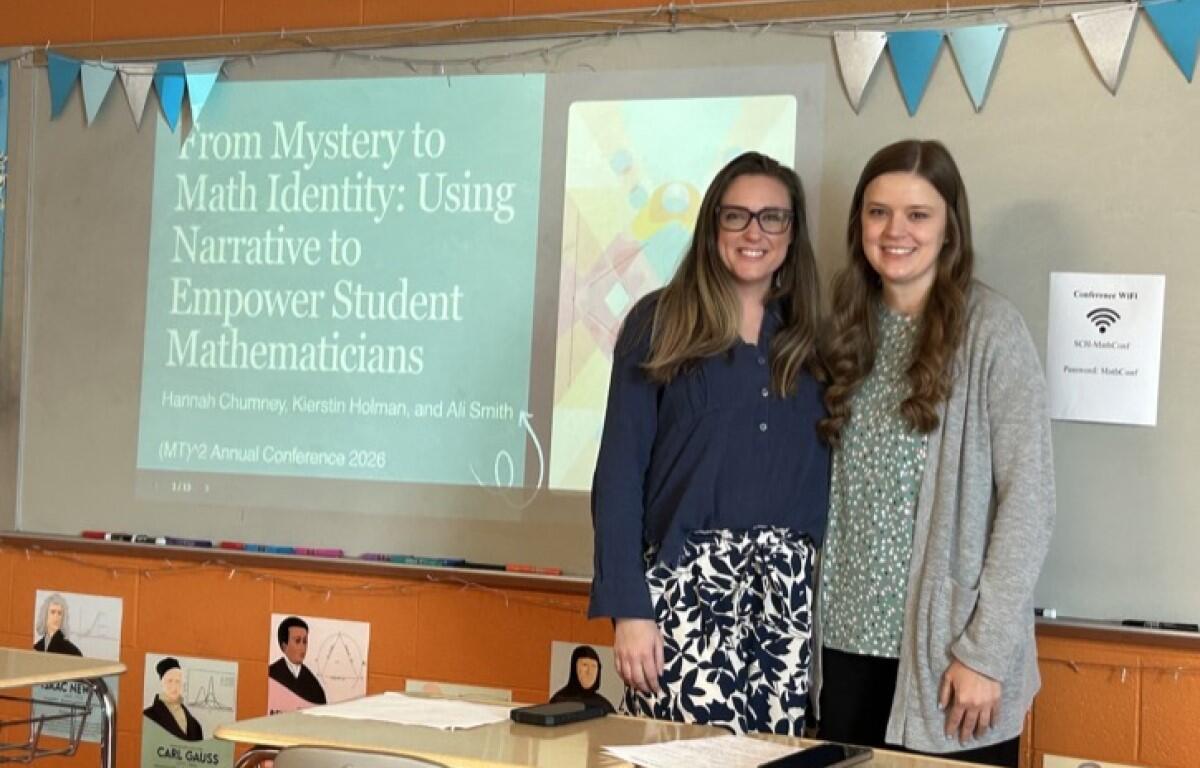
Holman’s work has gained attention beyond her school. She presented at the Middle Tennessee Mathematics Teachers Conference on “using narrative for growth mindset and math mindset” and discussed how mathematical biographies can change classroom conversations.