


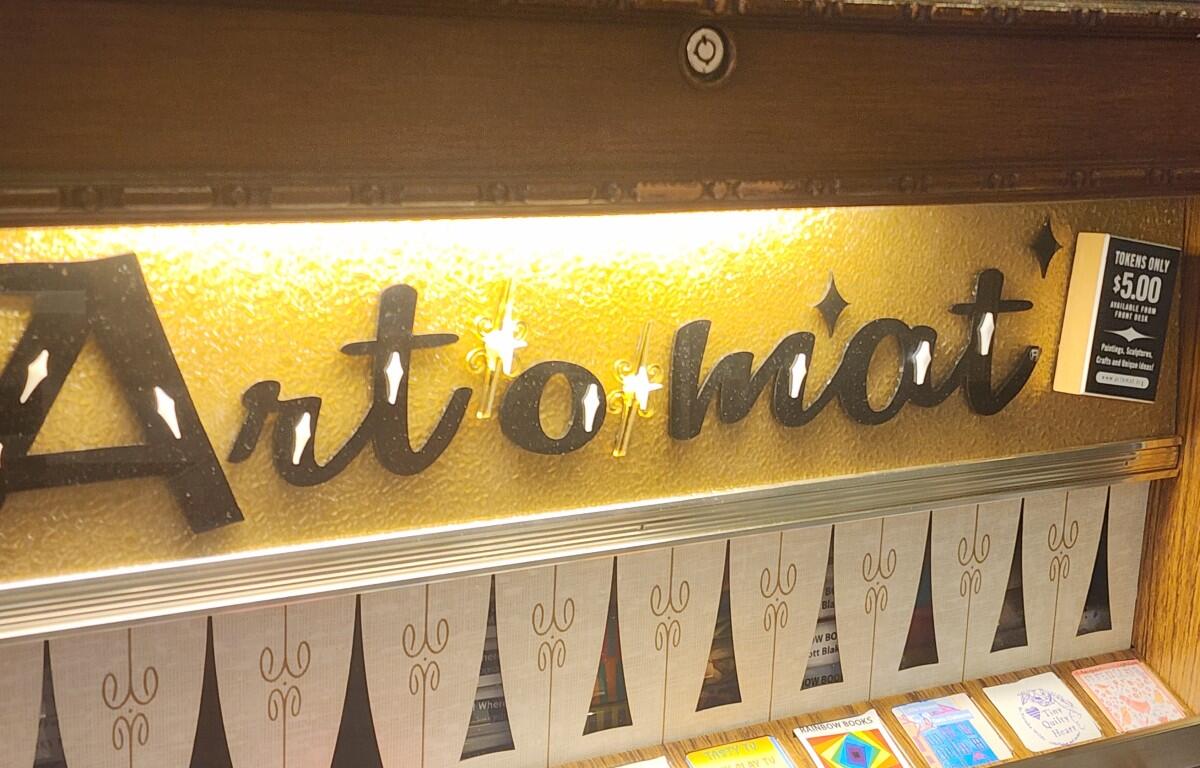

There is something delightfully human about buying something from a vending machine: the excitement that comes with hearing the satisfying clunk of an old-school machine and the anticipation of watching your treat drop into the tray.
That is why the new Art-o-mat installation at the Customs House Museum & Cultural Center feels like a natural fit, not only for the museum, but for Clarksville. Created by artist Clark Whittington in Winston-Salem, North Carolina, Art-o-mat machines are retired cigarette vending machines transformed into miniature art dispensers. What began as an art experiment has grown into a national network of more than 200 machines featuring work from artists around the world.
Now Clarksville has one, and its location at The Customs House makes sense.
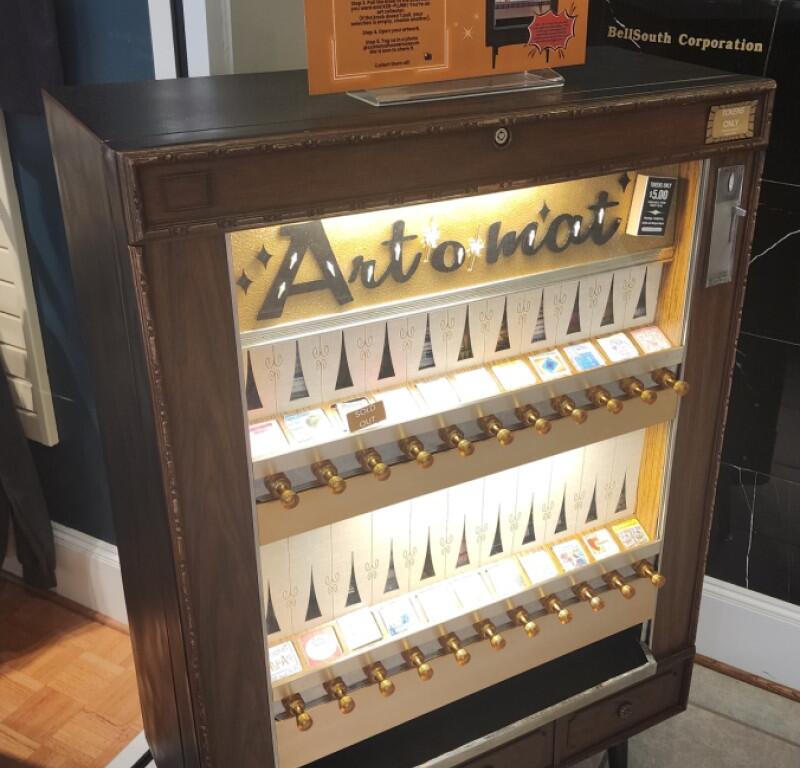
From cigarettes to works of art
There is an irony – and maybe even poetry – in placing an Art-o-mat inside a former tobacco-era building. The Customs House itself was built during Clarksville’s booming tobacco years, when this city’s economy revolved around warehouses, exports and commerce. Today, that same building has transformed into one of the region’s most important cultural institutions.
For Shana Thornton, the museum’s marketing and media manager, the Art-o-mat is about more than novelty. It is about accessibility. The machine gives visitors a way to buy small, original works of art for a modest price. Visitors can leave with signed, limited-edition artwork created by artists from multiple countries, including tiny paintings, paper creations, miniature sculptures, ornaments and reusable fortune-cookie pieces carrying handwritten messages.
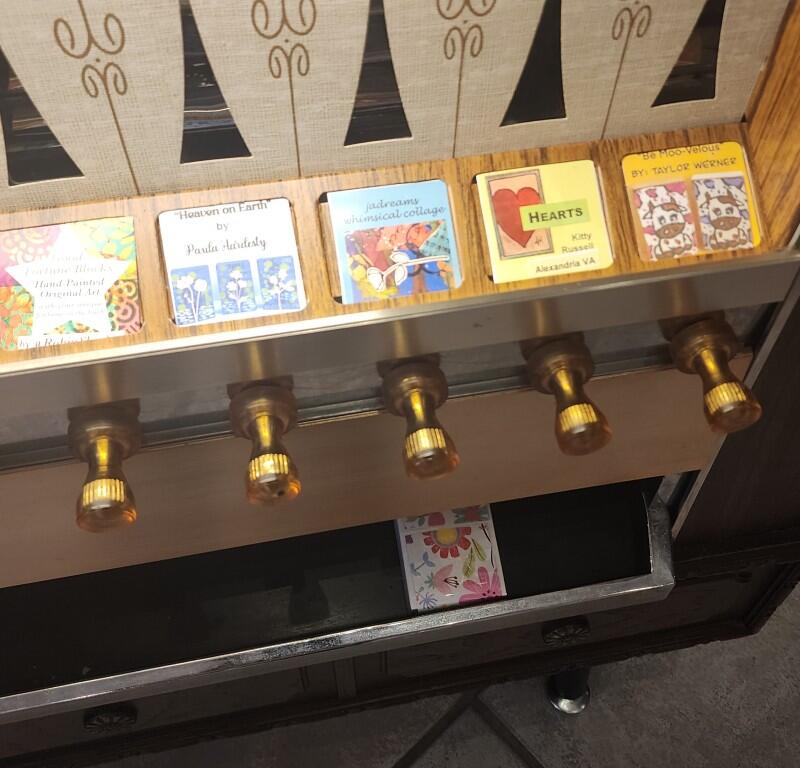
Like any vending machine, the Art-o-mat has quickly become a gathering point inside the museum lobby. Visitors check for new items. Staff members compare their favorite artists. Children drag parents toward it. Adults who may not normally walk into a gallery suddenly find themselves talking about texture, color, storytelling, and collecting art.
That is the genius of the Art-o-mat; it lowers the barrier to entry.
For years, arts organizations across the country have wrestled with the same challenge: How do you make art feel less intimidating and more personal? How do you create cultural spaces where the community feels invited instead of evaluated?
Sometimes the answer is not bigger exhibits or grander buildings. It’s a vending machine.
Art important part of city’s development
The Art-o-mat also connects to a larger conversation in Clarksville. As the city grows, economic development often centers on roads, housing, and industry. Arts and cultural institutions are part of that conversation, too, because they help shape identity, create shared experiences and make a place feel memorable.
Organizations like the Customs House Museum help give a growing city a sense of personality and permanence. They create the kind of quality-of-life experiences that attract visitors, residents and investors alike. And most importantly, they remind us that art belongs to everybody.
That may be why the Art-o-mat feels so charmingly perfect for this moment in Clarksville’s story. In a city evolving quickly, it offers something small but meaningful: surprise, curiosity, connection, and the chance to hold a little piece of someone else’s creativity in the palm of your hand.
That feels like a memorable return for a few dollars and a token.
Correction: Shana Thornton’s name and title were incorrect in a previous version of this report.