


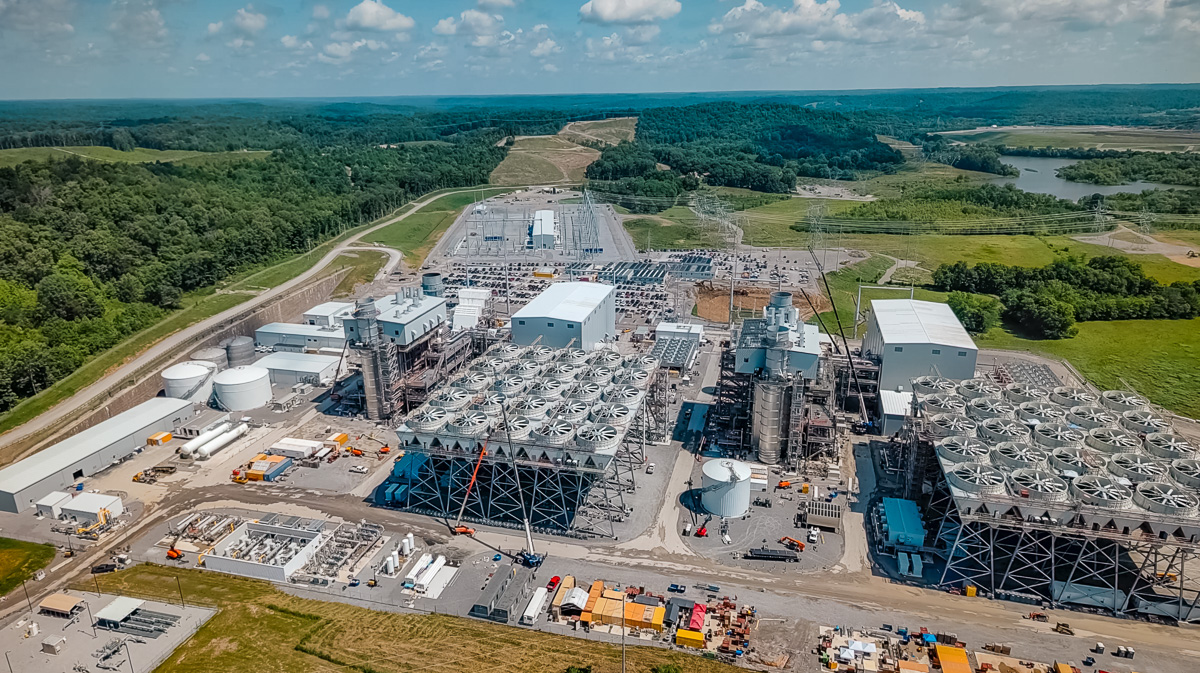

CUMBERLAND CITY, TN (CLARKSVILLE NOW) – Tennessee Valley Authority provided an inside look at construction of the Cumberland natural gas plant on Wednesday, showing the project’s progress and explaining how the facility will generate electricity once it enters commercial operation later this year.
The new plant is being built on TVA’s approximately 3,000-acre Cumberland Reservation in Stewart County. While the reservation spans thousands of acres, the combined cycle natural gas plant itself occupies roughly 35 acres, with an adjacent 500-kilovolt switchyard covering another 25 acres.
| VIDEO: Video tour of TVA Cumberland natural gas plant
Video by Wesley Irvin
Officials said construction is about 90% complete. Most of the remaining work involves electrical connections, insulation, and extensive testing of the plant’s systems before it begins full commercial operation. TVA expects the facility to be fully operational in late fall or early winter, ahead of its Jan. 1 deadline.
“We recently had two big milestones,” said Sam Vinson, TVA’s general manager for the Cumberland Combined Cycle project. “We not only fired the combustion turbine one, but also combustion turbine two and was able to sync them to the grid.”


When complete, the facility will generate approximately 1,450 megawatts of electricity, enough to power more than 780,000 average single-family homes. According to Vinson, it will become the largest single natural gas power plant project built in the utility’s system.
How TVA natural gas plant works
Unlike a traditional natural gas plant, the Cumberland facility uses a combined cycle design that captures energy that would otherwise be wasted. The process begins with two natural gas combustion turbines, which operate similarly to large jet engines. Natural gas is burned to spin the turbines, which in turn drive generators that produce electricity.
Instead of allowing the extremely hot exhaust gases from those turbines to escape through a stack, the plant routes the exhaust into Heat Recovery Steam Generators. These large units capture the heat from the exhaust and use it to boil highly purified water into steam. The steam then powers two separate steam turbines, producing additional electricity without burning more natural gas.
| PREVIOUSLY: TVA decides to keep coal-fired plant running alongside new gas plant
“This is a combined cycle gas plant, meaning we capture the exhaust off of the combustion turbine, feed it into a heat recovery steam generator, use that to make steam to power a steam turbine,” Vinson said. He compared the process to an automobile.
“The gas turbine is the motor in your car. The tailpipe is the exhaust. You capture that exhaust, use that to boil water, turn it into steam, and you make more electrons off the backside.” Since this plant is using energy that would otherwise be lost as heat, it can produce significantly more electricity from the same amount of fuel, improving the overall efficiency.
Closed-loop water system reduces water use
One of the most unique features of the Cumberland plant is its air-cooled condenser system, which replaces the large cooling towers commonly associated with older power plants. The plant first treats incoming water through a demineralization process, removing minerals and impurities that could cause damage.
After the purified water is converted into steam and passes through the steam turbines, it enters the air-cooled condenser. Rather than relying on large amounts of cooling water from nearby sources, rows of large fans force outside air across finned tubes, cooling the steam until it condenses back into liquid water.
That water is then collected, returned to the system and reused in a continuous closed-loop cycle. Since the same water is recycled repeatedly instead of being constantly withdrawn and discharged, the system uses a lot less water than traditional steam power plants that depend on cooling towers.
“One of the first of the kinds for TVA here is we’re using an air cooled condenser, so that replaces the old style cooling towers that you used to see,” Vinson said. “Much more efficient on water usage.”
Final testing underway
Although the plant has not yet entered commercial service, it has already begun producing electricity during portions of the testing process. TVA officials explained that each major piece of equipment must undergo extensive testing before the project is turned over for operation. These tests verify that electrical systems and control systems communicate properly while also making sure backup systems work like they are supposed to.
Part of the testing process is simulating equipment failures. “We’ll go and intentionally make a problem,” Vinson said. “That way we see if the system will take over and go through a redundant path to stay online.” TVA said testing is expected to continue through October.
| DOWNLOAD THE APP: Sign up for our free Clarksville Now app
Although the plant is still under construction, it has already begun generating electricity during parts of the testing process. As the turbines and other equipment get tested, the electricity produced doesn’t go to waste. Instead, it can be sent to TVA’s power grid when there is demand, such as during periods of extreme summer heat when electricity use is higher. These testing periods allow TVA to collect data to see how the plant is performing, and verify that the equipment is working properly, and provide additional power to the grid before the facility officially enters commercial operation.
Electricity generated at the plant is routed through the newly completed 500-kilovolt switchyard, the largest indoor gas-insulated switchgear installation TVA has built. The power produced at this plant will not be dedicated to Clarksville or any single community. It becomes part of TVA’s system serving all of Tennessee and portions of six surrounding states.
Workforce and project impact
The site reached a peak workforce of more than 2,500 day and night shift workers. As construction enters its final stages, approximately 1,000 trades and labor personnel remain on site completing work and testing. Vinson said the project has relied heavily on local workers and materials.
“We’re really proud of the work we’ve done here because we’re able to make more American megawatts using American labor, American parts and resources, and, keeping jobs here in the valley.”
Vinson explained the project is expected to strengthen TVA’s ability to meet rising electricity demand across its service area.
| DON’T MISS A LOCAL STORY: Sign up for the free daily Clarksville Now email newsletter