



CLARKSVILLE, TN (CLARKSVILLE NOW) – A West Creek High School student is calling for stronger mental health support after four student suicide deaths at her school, as district leaders outline the resources students can access in school and beyond.
Rising senior Sidney Kempf spoke at the June 16 Clarksville-Montgomery County School Board meeting, urging the district to take student mental health more seriously after she described a difficult year for her school.
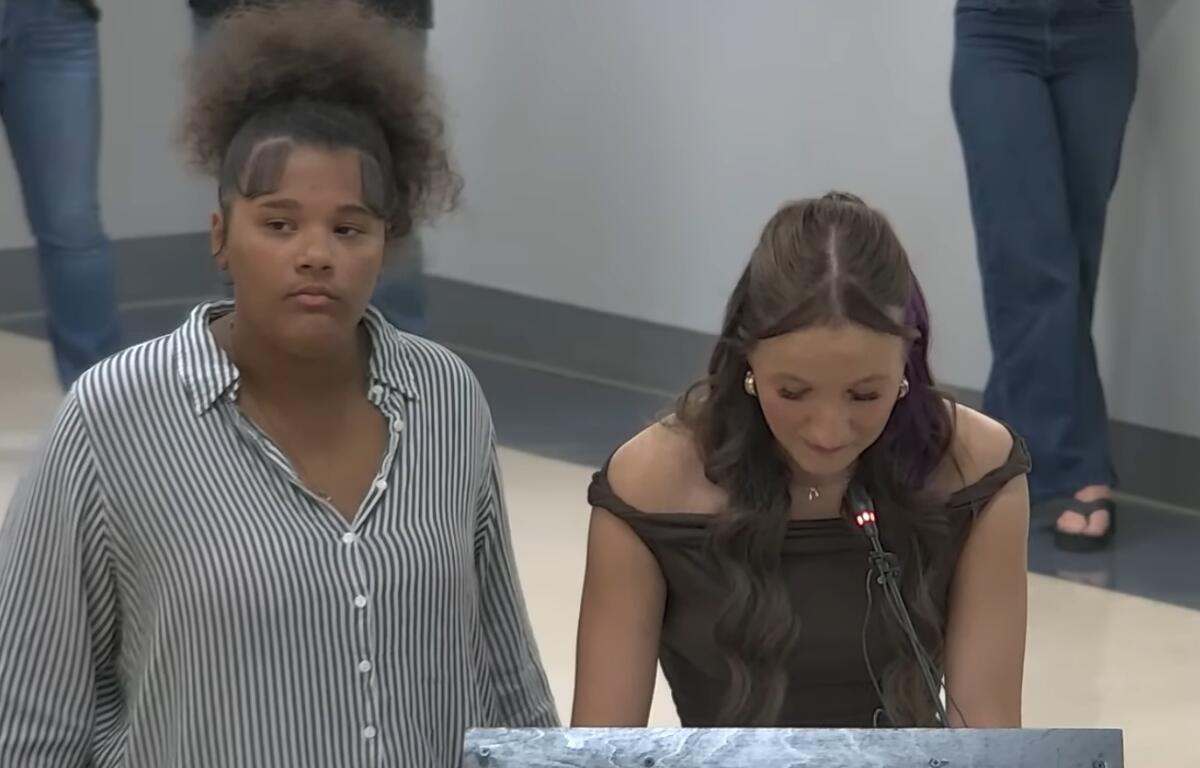
“I’m standing here tonight because over the last 13 months, our school alone has lost four students to suicide,” Kempf told the board. “Students who should still be here, and one of them was my friend.”
She added that many students hesitate to speak up because they are “terrified of being judged,” and she called for more consistent support. “This isn’t about blaming anyone,” she said. “Students need consistent support. We need mental health treated as seriously as physical health. We need students to know that asking for help is strength, not weakness.”
| BREAKING NEWS PUSH ALERTS: Sign up for our free Clarksville Now app
Kempf called for periodic mental-health check-ins and mandatory suicide-prevention education for students.
‘You never know what someone is going through”
Kempf told Clarksville Now the recent deaths pushed her to speak publicly, despite her discomfort with crowds. “Watching that happen really put a lot of courage in me,” she said. “I wanted to speak for the students at my school and the students all around Clarksville because everybody struggles with it.”
Kempf said the grief “hits really hard in the beginning” and does not “ever really fade away,” adding that many students and families are still struggling. She emphasized students need “open and honest” conversations about mental health, but the “stigma around asking for help” often keeps them silent. More check-ins from staff could help students feel more supported, she said.
For Kempf, the grief is personal, and her friend’s memory is central to why she stepped forward. “She was one of the funniest people I’ve ever met in my life, one of the brightest people, and so smart,” she said. “(She) had such a kind heart, and I was just so lucky to have ever been able to know her.”
“It really just shows that you never know what someone is going through, and I really want people to know that they’re not alone,” Kempf said, adding that she hopes to inspire people to “choose compassion more often.”
How students access support in schools
As Kempf pushes for more mental-health resources, district leaders point to the ways students can currently seek help while in school.
CMCSS spokesperson Anthony Johnson and the lead school counselors outlined the Counselor Referral System, where students can reach out through their school-issued laptop to connect with a school counselor.
Through that system, students in grades 3-12 can refer themselves, and teachers, parents or friends can refer a student they are concerned about. Whether a student is simply having a difficult day or needs long-term support, they can request assistance through the district portal. Families can also email school counselors directly through their school’s homepage.
According to Johnson, CMCSS has about 120 school counselors and nearly 100 behavior support staff working in schools.
The counselors said support can differ depending on grade level and is tailored to each school’s needs. In elementary schools, the focus is on foundational skills such as identifying emotions, interacting with peers and asking for help. Middle schools set aside 20 minutes each school day for either career development, Social and Emotional Learning lessons or counseling. In high schools, a “skinny period” is used for ACT prep and college readiness, while giving students non-academic time to seek individual counseling.
| NEWS ALERTS: To get free breaking news alerts on your phone, text the word NEWS to 43414.
The counselors emphasized the importance of teachers and staff knowing their students well, noting that people respond to circumstances differently and may need varying levels of support.
Mental health resources beyond the school level
To connect families with support outside of school, the district partners with Centerstone, Military and Family Life Counseling services and social workers.
“School counselors have limitations,” Johnson said. “They are not medical providers or clinical psychologists, but they work within that school community … to understand what resources are out there and connect families.”
CMCSS also maintains a Social and Emotional Learning hub with curated resources for families and the community, including grief support and suicide-prevention materials.
The district contracts with CareSolace, which provides 24/7/365 mental-health, substance-use and social-service support to students, families and employees. Johnson said CMCSS saw 1,465 inbound interactions with CareSolace last school year.
“Taking care of the community is a community effort,” Johnson said, adding that partnerships and family engagement remain central to their approach.
Training, crisis support, long-term initiatives
A few years ago, Johnson said, the district worked with the Tennessee Suicide Prevention Network to develop its “postvention guide,” and all employees participate in annual suicide prevention training. After tragedies, CMCSS assembles teams of school counselors to support affected students and staff throughout the district for as long as needed.
Johnson said social media has intensified struggles for students. “When I was in school … if someone was being mean to me, I could go home and never hear about it again,” he said. “That’s not the way anymore. They’re going to get on social media, they’re going to group text, they’re going to Snapchat.” He said the district teaches cyberbullying lessons to help students understand the emotional impact of what they post.
Johnson added that CMCSS also conducts annual campaigns centered on emotional-well being. “Just one kind word to another person can make a difference in their life,” he said.
Johnson said the district remains focused on how to best support students at West Creek and across the district. “Some of those structures that were put in place before were maybe not being taken advantage of,” he said. “So again, just encouraging people to take advantage of the resources that we have there … and for those who feel like we aren’t doing enough, let us know specifically what we can do and we’re going to work towards that.”
If you or someone you know is at risk of suicide, call the National Suicide Prevention Lifeline at 988. Calls are free, confidential, and are answered 24/7.
| GET YOUR LOCAL MORNING NEWS: Sign up for our free daily email newsletter.