



CLARKSVILLE, TN (CLARKSVILLE NOW) – As the world watched the leadup to the Artemis II launch on Wednesday at Cape Canaveral, Florida, some people in Clarksville were listening for a familiar voice: that of Rossview High School graduate Davis Hunter giving his team’s “go” for launch.
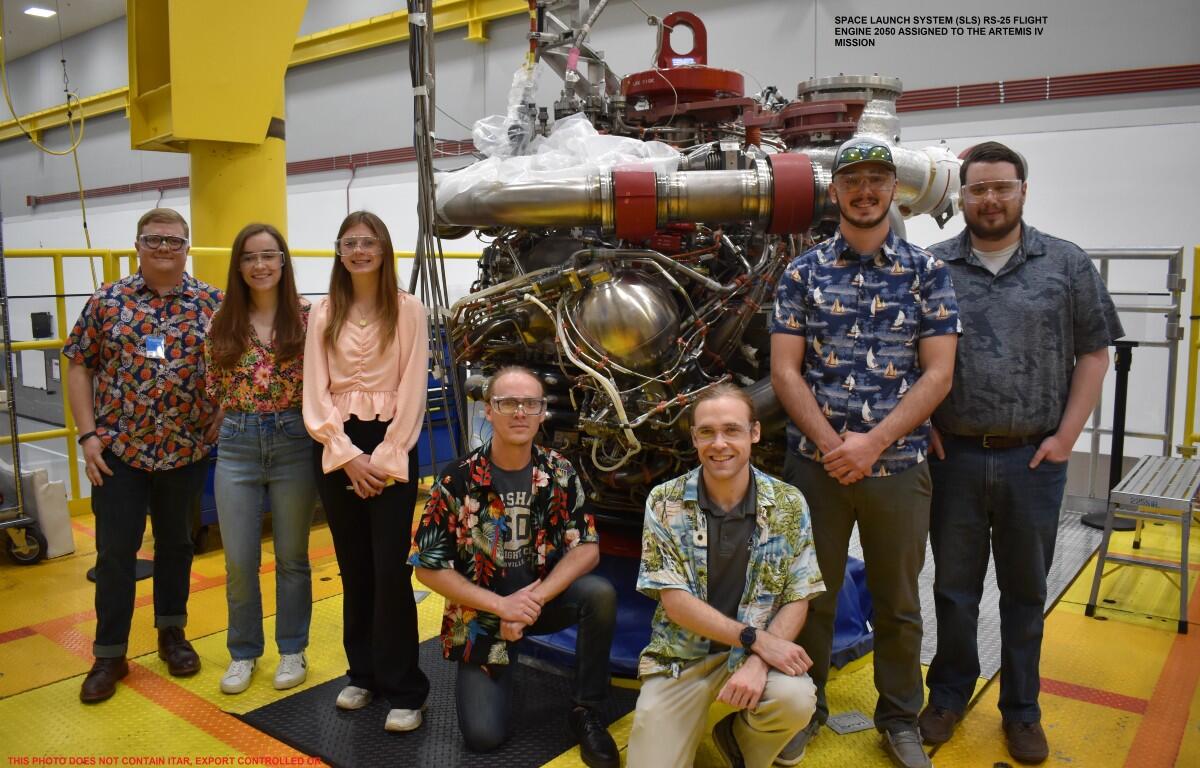
Hunter, who was born and raised in Clarksville, is the Space Launch System Engines-Propulsion Element Discipline lead engineer and the RS-25 Engine Systems Project Lead. Basically, he led one of the many NASA teams that launched the Artemis crew toward the moon.
“It was pretty amazing yesterday,” Hunter said Thursday morning in an interview with Kyle and Tiffany of the Q108 Morning Crew. “We’re just carrying through, reviewing all the data today; it looks so good. Extremely healthy systems, great performance, amazing launch.”
Artemis II mission to moon
The Artemis II crew will zip around the moon in an out-and-back slingshot. They include mission commander Reid Wiseman, Victor Glover, Christina Koch and Jeremy Hansen. The four astronauts are the first to fly NASA’s Orion capsule, launching atop a Space Launch System (SLS) rocket from Kennedy Space Center.
“It’s absolutely indescribable when it’s actually happening,” Hunter said of the launch. “The amount of stress that came up as soon as the crew gets on the rocket, and then when we get into the last few minutes before launch, all of our systems pressurize, and that’s when the engines really have to do their work, and then as they ignite about six seconds before the rocket takes off, that’s when both the stress and pride are through the roof.
“Being able to look at it afterwards and know that those four folks – Christina, Reid, Victor and Jeremy –are all safe and on their way to the moon, it’s absolutely indescribable.”
The Artemis II mission is a critical step in the SLS rocket program, ahead of the future follow-up mission that will involve astronauts landing near the moon’s south pole.
From Rossview to UAH to NASA
Hunter graduated from Rossview High School in 2014 with an early interest in rockets and engineering.
“I was touring around different colleges and really liked what was going on in Huntsville (University of Alabama in Huntsville); the engineering here is amazing just because of how close it is to NASA Marshall Space Flight Center, the engineering center that designed and created all the manufacturing processes that enabled SLS,” Hunter said.
“Going to University of Alabama in Huntsville, lots of opportunities arose for NASA internships.”
His first internship with NASA was in the summer of 2016, and it involved building a satellite maneuvering simulator from scratch. In 2018, he became a civil servant in the Pathways co-op program, which involved working with several groups at the Marshall Space Flight Center, he said. After graduating with a bachelor’s in aerospace engineering in December 2019, he joined the Engine Systems branch.
Giving the ‘go’ for launch
On Wednesday, as the system checks proceeded toward countdown, Hunter was stationed at the SLS Engineering Support Center in Huntsville, surrounded by the rest of the Liquid Engines team. His team monitored data streams coming from the rocket, making sure that all engines were operating correctly.
When the team was called upon, Hunter gave his team’s “go” for launch. “It was an amazing feeling,” he said. “I’ll never forget that moment.”
The Associated Press contributed to this report.