


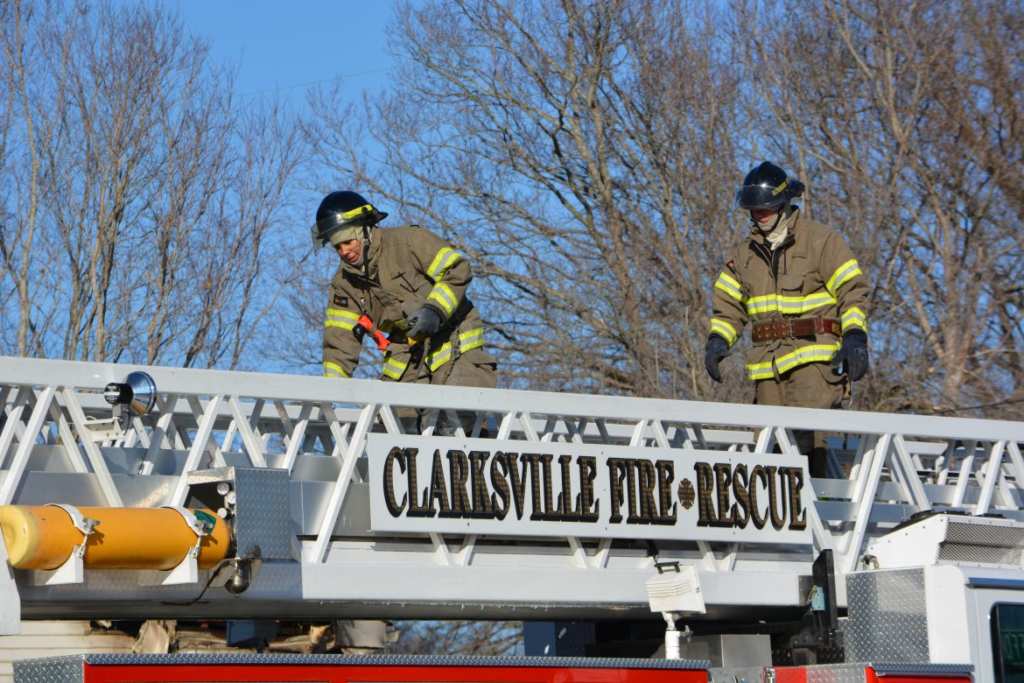

CLARKSVILLE, Tenn.– (CLARKSVILLENOW) Manufactured houses are the scenes of relatively few fires every year in Tennessee, but those fires are among the deadliest.
There is a disproportionate number of fire-related deaths in manufactured homes, which has prompted the Tennessee State Fire Marshal’s Office to remind consumers that fire safety should be a priority in all homes, especially during the high-risk winter months.
Manufactured homes – also known as mobile homes or trailers – are transportable structures that are fixed to a chassis and specifically designed to be towed to a residential site. They are not the same as modular or prefabricated homes, which are installed on a foundation. Currently, Tennessee has more than 260,000 manufactured homes.
According to the Tennessee Fire Incident Reporting System (TFIRS), fire departments responded to 1,857 fires in manufactured homes during 2012-2016. Those fires killed 79 civilians, injured 76 civilians and 18 firefighters, and caused $29.6 million in direct property damage. State data indicates that 16 percent of Tennessee fire deaths happen in manufactured homes, even though this type of structure only makes up nine percent of Tennessee housing stock.
While manufactured homes are no more prone to fire than homes built on site, the manufactured home fire can be severe. All residential homes can be better protected utilizing built-in fire protection systems such as fire sprinklers. These not only save lives, but property as well.
A fire in a home located in a rural area has a greater chance of becoming a “total loss fire” because of the increased amount of time needed for firefighters to reach the home. Lack of working smoke alarms is also a factor often noted in fatal manufactured home fires.
If buying or renting a manufactured home is in your future, make sure you keep fire safety in mind. By following a few tips and knowing the facts and safety requirements for manufactured homes, you can help keep your family safe.
• Choose a manufactured home built after June 15, 1976, that has the U.S. Department of Housing and Urban Development (HUD) label certifying that the home meets the minimum safety standards.
• Keep gasoline, charcoal lighter and other flammable liquids locked in an outdoor shed. Never store items under your manufactured home. Store firewood away from the home.
• Install skirting material to keep leaves and other debris and combustible items from blowing under your manufactured home where it could easily catch fire and spread into the home.
• Be sure your manufactured home has enough smoke alarms. If your home does not have smoke alarms in or near every sleeping room and in or near the family/living area(s), immediately install new alarms and fresh batteries to protect these rooms. For the best protection, interconnect all smoke alarms throughout the home. When one sounds, they all sound.
• Have a home fire escape plan that includes two ways out of every room and an outside meeting place. Make sure all ways out of the home are cleared of clutter and easy to use. Practice your fire escape plan at least twice a year.
• If smoke alarms sound when cooking, consider moving the alarm further from the kitchen area or install a photoelectric type alarm which is less sensitive to cooking.
• Consider having a licensed electrician inspect the electrical system in your manufactured home to be sure it is safe and meets applicable National Electrical Code® requirements.
• Never add too many plugs to outlets, extension cords or electrical circuits. If the circuit breaker trips or fuses blow, call a licensed electrician to check your system.
• Have smokers smoke outside the home. Provide large, non-tip ashtrays and empty them frequently. Douse butts with water before throwing them away.
• Do not smoke in bed or in a chair in which you are prone to fall asleep.
• Keep space heaters and candles at least three feet away from anything that can burn. Turn off portable space heaters and blow out candles before falling asleep or when leaving a room.
• When considering a new manufactured home, ask if residential sprinklers are available as an option.
For additional information on manufactured homes, contact the Tennessee Housing Association at 615-256-4733.
About the Tennessee Department of Commerce & Insurance: TDCI protects the interests of consumers while providing fair, efficient oversight and a level field of competition for a broad array of industries and professionals doing business in Tennessee. Our divisions include the State Fire Marshal’s Office, Insurance, Securities, Consumer Affairs, Tennessee Law Enforcement Training Academy, Regulatory Boards, Tennessee Emergency Communications Board, Tennessee Corrections Institute, and TennCare Oversight.