


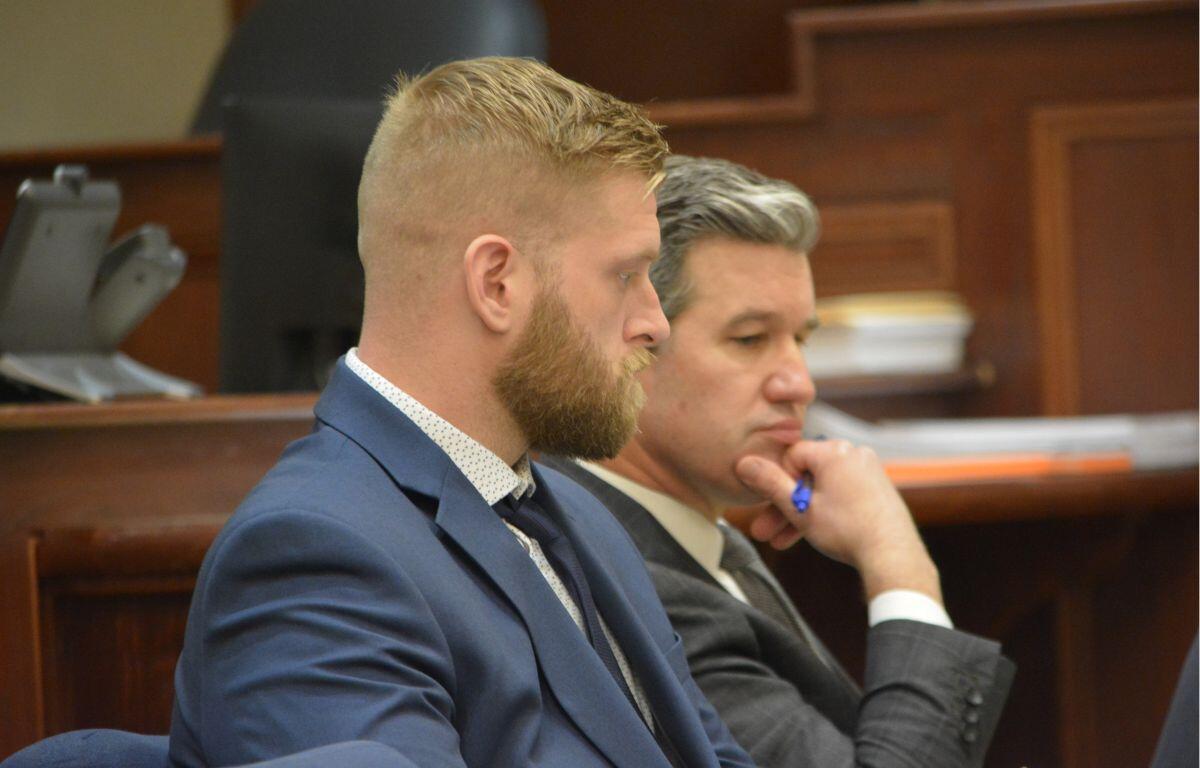

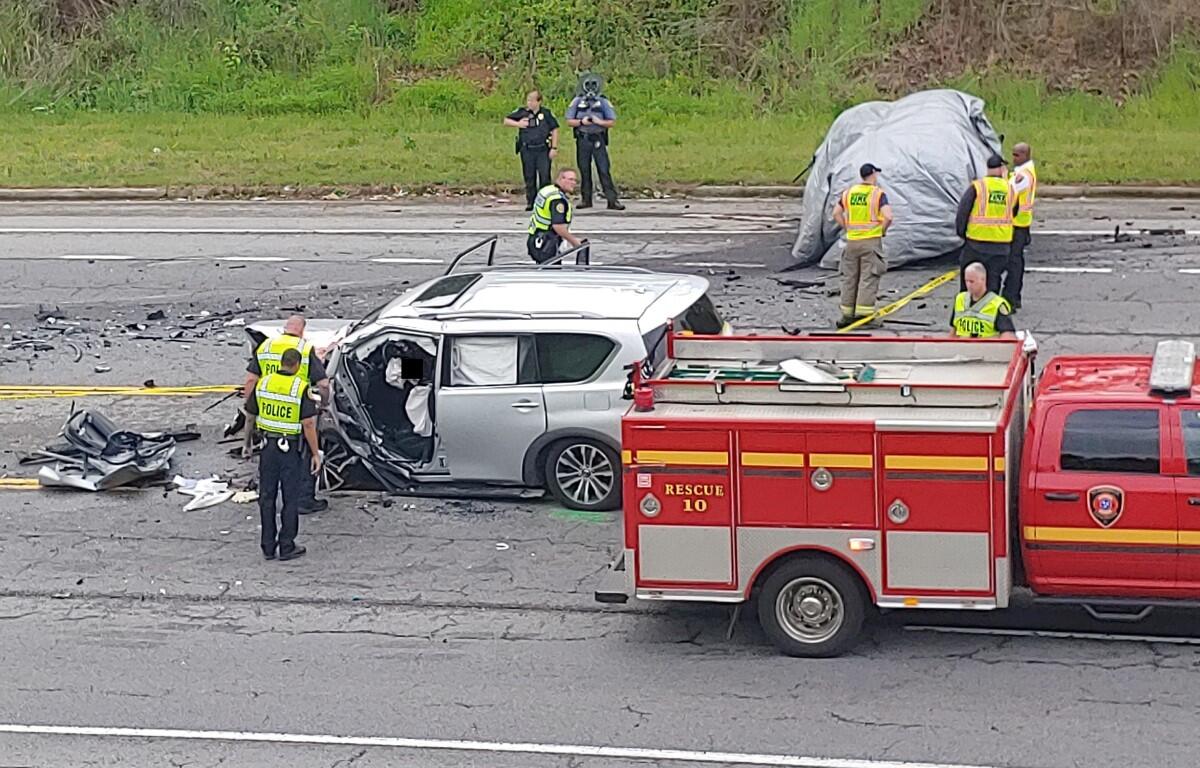
CLARKSVILLE, TN (CLARKSVILLE NOW) – Testimony continued Wednesday in the vehicular homicide trial stemming from the 2021 Tiny Town Road crash that killed 21-year-old Kaitlyn Harris and injured her infant son.
Zachary Michael Schunn, 35, has pleaded not guilty to all charges.
Medical examiner: ‘She had a lot of blunt force trauma’
Dr. Emily Dennison, a forensic pathologist and medical examiner, testified that Harris suffered extensive internal and external injuries consistent with a high-energy head-on collision.
Dennison detailed many injuries including fractures in Harris’ arm and legs, a swollen brain, and internal bleeding. The spinal cord was “completely severed in two separate areas,” Dennison said, adding that several of the injuries were independently fatal. Dennison ruled the cause of death as blunt-force trauma.
Crash data: SUV traveling 79-85 mph with no braking
Lt. Melissa Spielhagen with the Clarksville Police Department’s Fatal Crash Investigation Team testified that she arrived at the scene while driving to work on May 5, 2021. Body camera footage played for jurors showed Schunn appearing confused, recalling only his first name and telling officers he was 11 years old.
Spielhagen analyzed data from the air bag control module in the rented silver SUV Schunn was driving, which records data at the moment of deployment. The module showed the vehicle was traveling between 79 mph and 85 mph in the seconds before impact, with no indication of breaking.
She noted that tire size or vehicle interactions can affect recorded speeds, but said the data was consistent with what she observed at the scene and with dashcam footage from a bystander.
Toxicology experts detail Ambien levels, sleepwalking risks
Agent Matthew Buck, a forensic toxicologist with the Tennessee Bureau of Investigation, testified that Schunn had 81 ng/mL of Ambien in his system, within the therapeutic range. Buck said sleepwalking is a documented side effect and cited a 1995 study showing 0.3% of users experienced sleepwalking, with higher risk among those with a prior history.
Dr. Jonathan Lipman, a toxicologist and neuropharmacist, testified that Schunn had long-standing insomnia, anxiety, depression and alcohol abuse disorder. He said Schunn had been cycled through multiple medications and dosage changes in the couple years leading up to the crash.
Lipman testified that the Ambien concentration in Schunn’s blood was “not compatible with the hypothesis that this resulted from a single 10 milligram doses taken the evening before.” He said rare adverse reactions can including taking additional doses unknowingly, sleepwalking and even sleep-driving.
Lipman also said Schunn’s medical history and alcohol abuse disorder placed him at higher risk for such reactions and that he should not have been prescribed Ambien.
Defendant testifies: ‘I would not have done that’
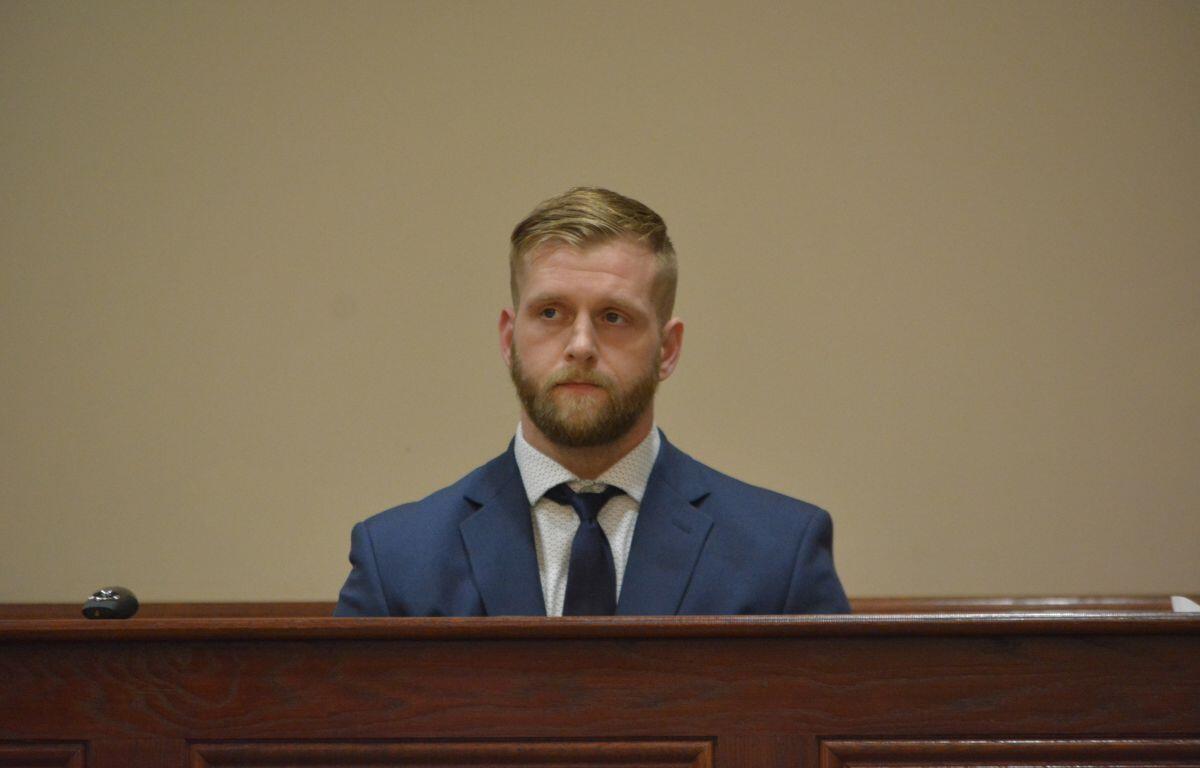
Schunn took the stand in his own defense Wednesday, describing years of worsening insomnia that he first reported during his Army deployment to Afghanistan in 2011. He said he was initially told to “take some Benadryl and figure it out.”
By 2019, while stationed at Fort Campbell, he said his insomnia intensified. “I felt that the less sleep I was continuously getting, the more anxious and depressed I was,” he said.
Schunn said he turned to binge drinking when over-the-counter medications stopped helping, and that stigma around mental health delayed him from seeking further treatment. Once he did, he said he was cycled through numerous medications that made him feel worse or did not help him sleep. “They were just throwing everything they could at me to shut me up,” he said.
He testified that he relapsed with alcohol in November 2020, reported it to his doctors and had been sober for about six months until the day of the crash. Schunn said he has no memory of drinking, putting on his Army uniform or getting behind the wheel.
“I would not have done that,” he said.
Schunn testified that after being home the night of May 4, 2021, his next memory was waking up before his fourth surgery the following day.
Court recessed Wednesday and closing arguments are scheduled for Thursday at 8:30 a.m. at the Montgomery County Courts Center.
| DON’T MISS A LOCAL STORY: Sign up for the free daily Clarksville Now email newsletter