



CLARKSVILLE, TN (CLARKSVILLE NOW) – Starting with the initial announcement that Crucible Metals will build a massive new smelter to replace the old Zinc Plant, there have been promises of a better environmental outlook – of cleaner operations using new technologies from a company, Korea Zinc, touted as having a strong environmental reputation.
But what does that look like in practical terms? Here are some answers that Crucible Metals provided for Clarksville Now on matters including the much-discussed “residue ponds,” water usage, and air and water emissions.


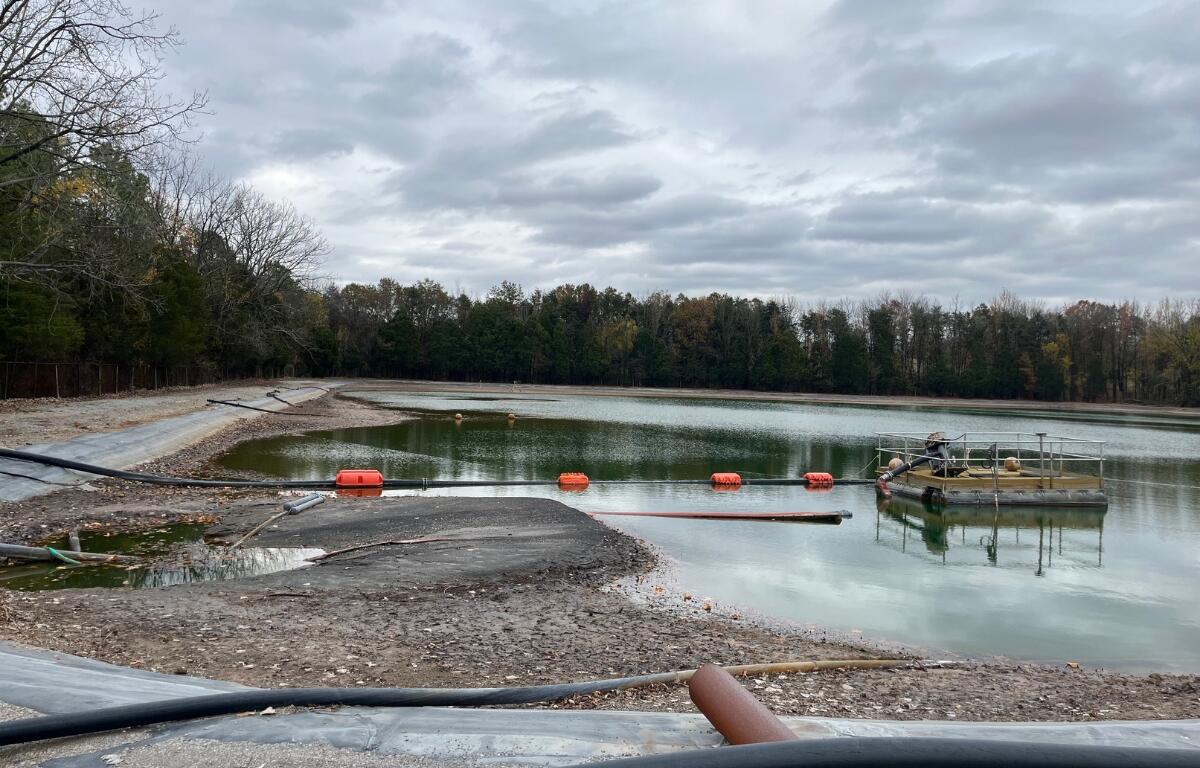
Cleaning up, using massive residue ponds
A benefit for Crucible, for Clarksville and for the environment will be that the company will acquire, as an asset, something Nyrstar had produced as waste: several “residue ponds” containing leftovers from the zinc refining process.
The old zinc plant used a single-line production method – one that forked at the end. Ore went into the plant, and the plant separated out, refined and sold the zinc. Whatever was left over was stored in massive ponds, to be maintained until some possible future use.
There are several of these “historic residue ponds” on site, ranging in size from tens of thousands to several hundred thousand cubic meters, according to Crucible officials.
While the zinc plant hasn’t changed much since 1978, there have been major improvements in metal refining technology and the need for rare metals, and, it turns out, those ponds are packed with rare metals. Among them are copper, silver, gallium and germanium.
The new Crucible Metals plant is designed to process 60,000 to 80,000 dry metric tons per year of this “Clarksville Pond Cake” material, officials said, estimating this will take 10 to 15 years. The new plant will not have or need any residue ponds, as it will make full use of the product it receives.
So, Crucible will get high-value product to sell, while cleaning up 50 years of industrial leftovers.
Water use for current, new plants
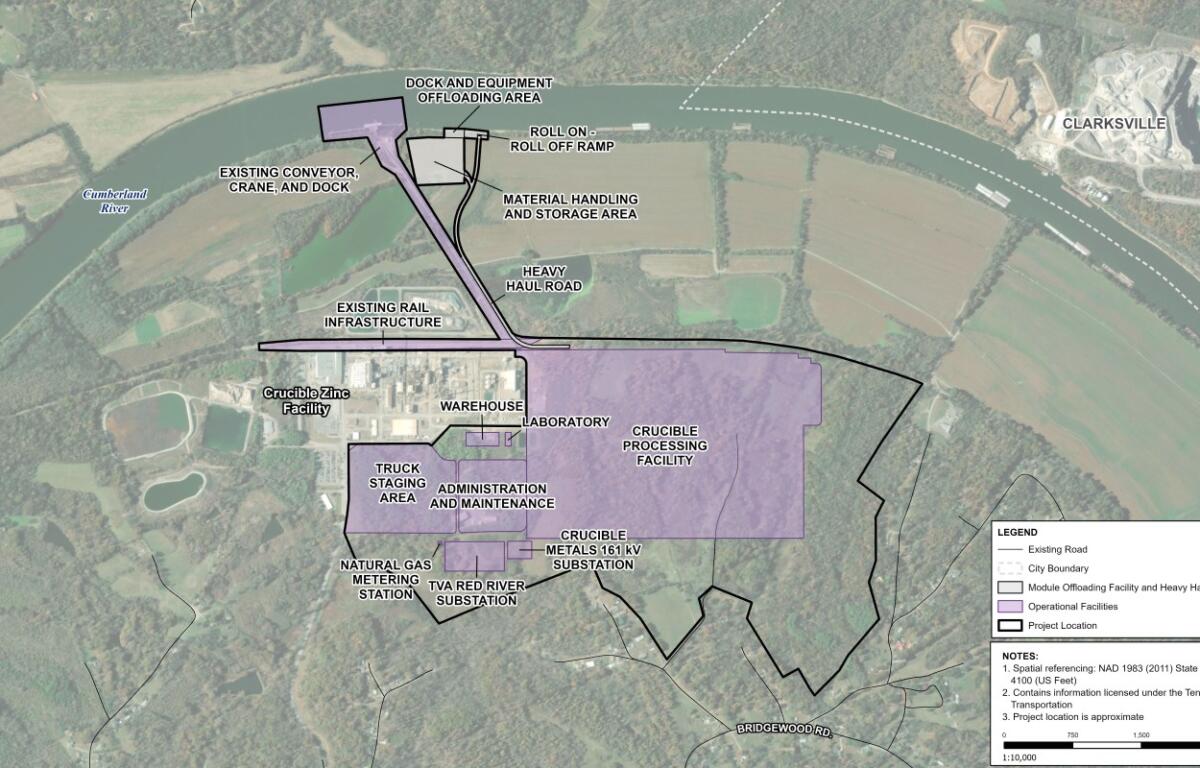
The existing zinc plant pulls about 1 to 1.5 million gallons of water per day (MGD) from the Cumberland River, and discharges just under 1 MGD of treated process wastewater, Crucible officials said.
“The new Crucible Metals facility will operate on a substantially larger scale and will incorporate integrated smelting and refining processes for a wider range of metals,” officials said.
Its industrial water demand will range from about 5 to 7 million gallons per day, depending on operating conditions. They will then discharge about 1.4 MGD of treated wastewater, with a maximum of 2 million.
The Cumberland River flows about 121 million gallons per day through Clarksville, according to the RiverApp website. For context, the Clarksville Water Treatment Plant, which is upstream from the zinc plant, is rated for 30 million, according to city records.
Re-using industrial water on-site
However, some of that 5-7 MGD demand will be met by recapturing water on site. “The project incorporates a dedicated on-site wastewater treatment system, internal process-water recycling and reuse, and infrastructure for stormwater collection, storage, and management,” officials said.
Crucible is evaluating ways to capture and reuse collected rainwater for its processes, so they can minimize the amount of water drawn from the Cumberland. No estimates of that amount are yet available.


Pollutants at current zinc plant
Under Nyrstar as of 2024, the most recent EPA data available shows the zinc plant released about 200,000 pounds of toxins per year by air, mostly sulfuric acid, with some zinc compounds. In water pollution, the zinc plant released almost 30,000 pounds of toxins, mostly zinc compounds.
While those numbers may seem high, that is only one-tenth the amount of pollution created by the nearby TVA Cumberland Fossil Plant, which as of 2024 released 2 million pounds of toxins by air and 230,000 pounds of toxins by water. Those pollutants are mostly sulfuric acid and hydrochloric acid by air, and nitrate compounds by water – into the Cumberland downstream from Clarksville.
The existing zinc plant – now known as Crucible Zinc – will be shut down about six months before the new Crucible Metals plant begins production, estimated in 2030, officials said. Eventually, it will be dismantled and paved over.
Air emissions at Crucible Metals
Comparable toxin release estimates weren’t available, but Crucible said that while the size and productivity of the new smelter will be much higher – with associated higher permit levels – the facility will be much more environmentally clean and efficient.
“The new facility is being designed with multiple layers of advanced environmental controls intended to capture, treat, and minimize air emissions throughout the production process,” officials said. “Key systems will include high-efficiency dust collection equipment, enclosed emission-capture systems, advanced off-gas treatment technologies, and environmental monitoring systems.”
Among new technologies at Crucible Metals will be “Direct Redox Smelting.” Traditional smelting involves separate stages, but the DRS process streamlines smelting, reducing the need for material transfers and handling, which also minimizes the release of dust and other emissions.
Water treatment at Crucible Metals
Unlike with the current plant, processes at Crucible are designed to retain valuable metals, so they can be sold as product, rather that disposing of them.
“The new facility will incorporate a dedicated, multi-stage wastewater treatment system designed to remove metals and other impurities before treated process wastewater is discharged to the Cumberland River,” officials said. “The overall approach is designed to maximize the recovery of valuable materials, minimize potential pathways for pollutants to enter the surrounding environment, and support measurable environmental performance.”
| ADD US ON GOOGLE NEWS: Click here to see more local news from Clarksville Now