


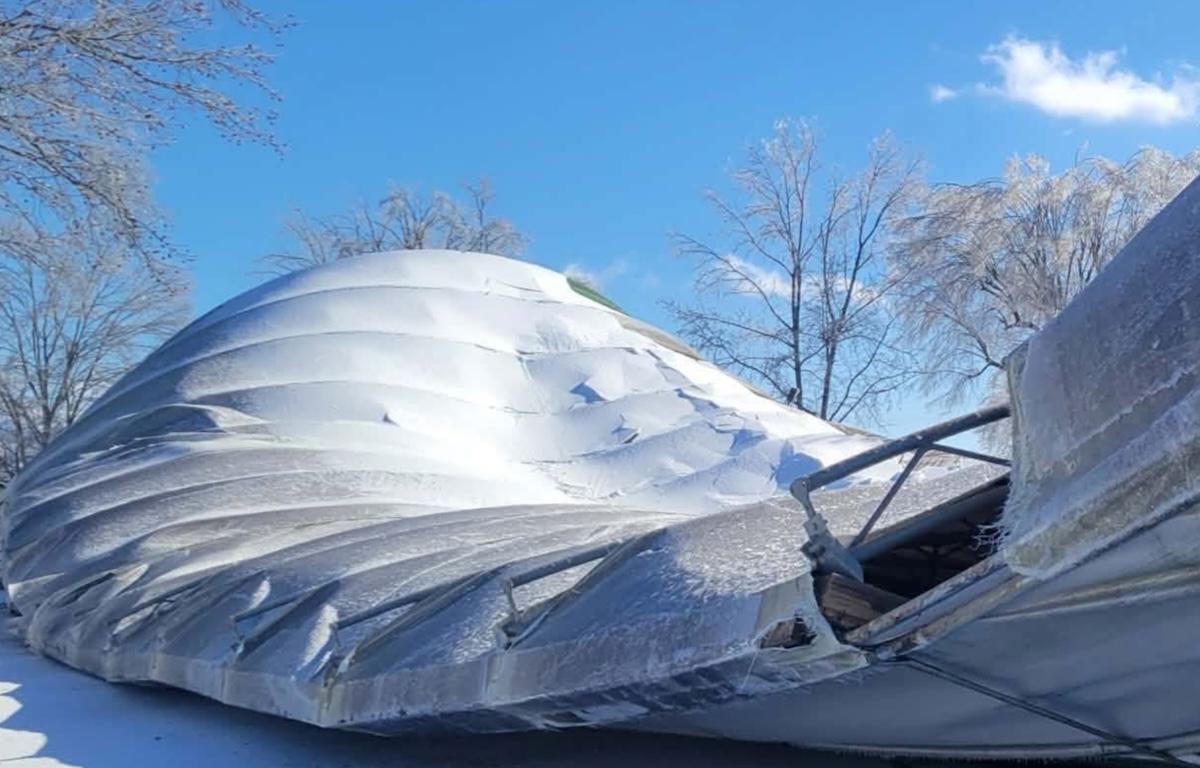

CLARKSVILLE, TN – The State of Tennessee has received an amendment to the federal major disaster declaration for Winter Storm Fern, expanding available aid to include FEMA Individual Assistance for 29 impacted Tennessee counties.
Under the amendment, survivors in the following counties are now able to apply for Individual Assistance: Benton, Carroll, Cheatham, Chester, Clay, Davidson, Decatur, Dickson, Dyer, Fayette, Hardeman, Hardin, Henderson, Hickman, Lewis, Macon, Madison, Maury, McNairy, Montgomery, Perry, Robertson, Rutherford, Shelby, Sumner, Trousdale, Wayne, Williamson, and Wilson.
This assistance comes after all 95 counties were either designated for FEMA Public Assistance or emergency protective measures under Public Assistance.
“This amendment is an important step in helping Tennesseans recover from this disaster and ensuring more survivors can access the support they need,” said TEMA Director Patrick C. Sheehan. “We are grateful to the White House, FEMA, and the U.S. Department of Homeland Security for considering the data provided by TEMA and our state agency partners and for working with Tennessee to maximize the assistance available to individuals and families who experienced losses.”
About FEMA Individual Assistance (IA)
Individual Assistance can help eligible survivors with disaster-related expenses such as temporary housing, home repairs, replacement of essential personal property, and other serious disaster related needs.
Survivors in the designated counties who sustained damage from Winter Storm Fern are encouraged to apply for assistance through FEMA.
Tennesseans can apply for FEMA IA by:
- Visiting DisasterAssistance.gov
- Calling 800-621-3362
- Using the FEMA App
To watch an accessible video on how to apply for disaster assistance, visit FEMA Accessible: Registering for Individual Assistance (youtube.com).
If you use a video relay service (VRS), captioned telephone service, or other communication services, give FEMA your number for that service. More information on FEMA’s IA program can be found here.
Applying for federal disaster assistance from FEMA will not affect other federal benefits that survivors may receive, like Social Security, Medicare, Medicaid, Supplemental Nutrition Assistance Program (SNAP) benefits, or other federal welfare and entitlement programs.
Before an Applicant starts a FEMA application, they should be prepared to provide:
- Contact information: Provide the address of the property where the damage occurred and the address, phone number, and valid email address of where FEMA representatives can reach you.
- A Social Security Number
- Damage Information: Describe the damage caused by the disaster. Include the type of disaster, and the type of home or vehicle.
- Financial information: Provide your total annual household income, before taxes.
- Insurance information: Describe the type(s) of insurance converge you have. This could include homeowners, flood, automobile, or mobile home insurance.
Important Reminder for Applicants
After applying for assistance, survivors may receive phone calls from FEMA from an unknown or unfamiliar number. It is important to answer these calls, as FEMA may need to speak with applicants to continue processing their case. In some situations, an application may be delayed or initially denied if FEMA is unable to reach the applicant. Survivors should also remember that FEMA representatives will never ask for payment. FEMA representatives will identify a case using the registration number assigned to the survivor’s application.
More information and updates about available assistance can be found on our January 2026 Winter Weather webpage.