



Updated with additional quotes.
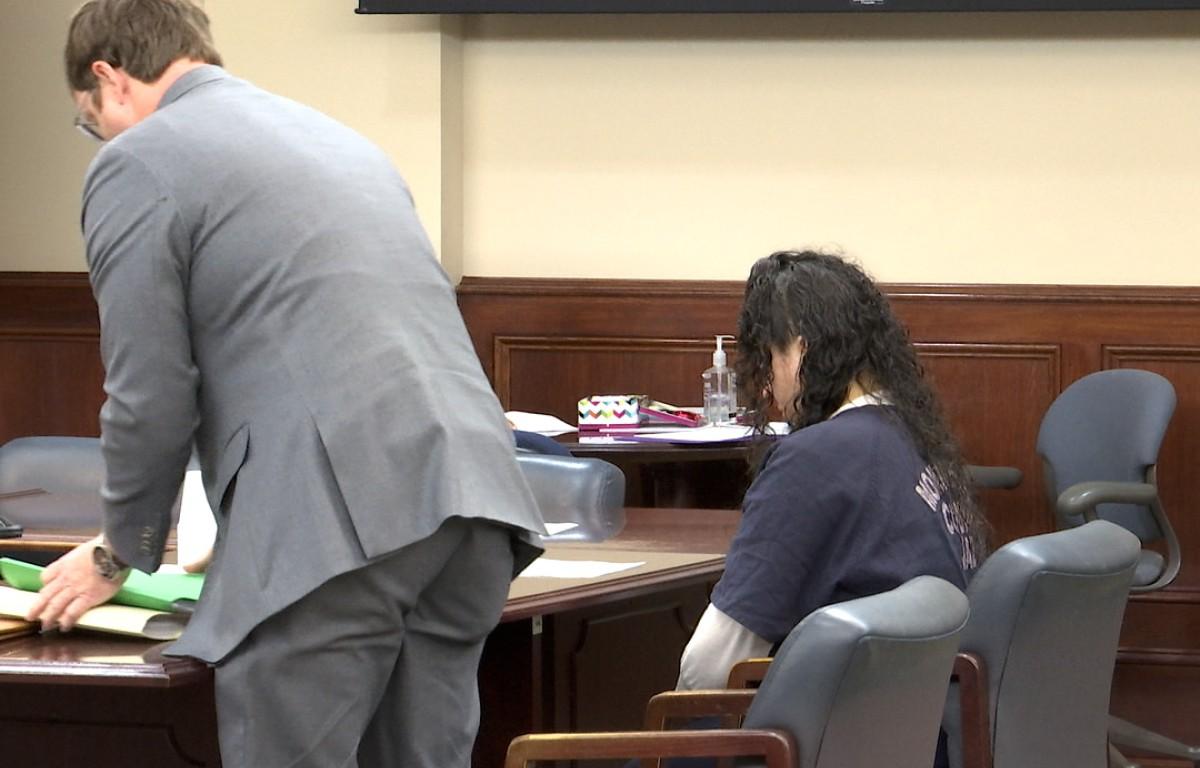
CLARKSVILLE, TN (CLARKSVILLE NOW) – Cheyenne Dawn Maddox was sentenced Tuesday to serve 20 years for the 2022 death of her disabled 13-year-old son, Kadaris Maddox.
Judge William Goodman III ordered Maddox to serve three years for reckless homicide and 17 years for aggravated child abuse, to be served “concurrently,” at the same time.
Maddox was found guilty in October 2025 of reckless homicide and aggravated child abuse. She had originally been charged with first-degree murder and aggravated child neglect following Kadaris’ death on July 6, 2022. Reckless homicide is a Class D felony that carries a sentence of two to four years, while aggravated child abuse is a Class A felony punishable by 15 to 25 years.

Death ruled homicide by malnutrition
The autopsy report states that Kadaris died as a result of malnutrition. As previously reported by Clarksville Now, he was approximately 46 inches tall and weighed just 35 pounds at the time of his death. Joshua Clegg, a patrol officer with the Clarksville Police Department who was first on the scene in 2022, described Kadaris as “severely emaciated, just skin and bones.” The kitchen and freezer were packed with food, and there were canned goods across the floor.
| NEWS TIPS: Do you have a local news tip? Email news@clarksvillenow.com or call us at 931-648-7720.
During the trial, Kadaris’ pediatrician and a former home nurse testified about his dramatic weight loss and the conditions inside the home in the months leading up to his death.
After two days of deliberation, the jury convicted Maddox of the lesser charge of reckless homicide and found her guilty of aggravated child abuse.
Maddox addresses the court
Maddox gave a statement before sentencing, becoming emotional as she spoke about her son and her mental health struggles. “I’m a mother to seven beautiful … children, and three years ago – on July 6 – I lost everything I love most in my life,” she said. “I hold myself accountable for my negligence, for my son’s passing and to acknowledge that I failed my son.”
She told the court that after her husband died by suicide, she fell into a deep depression that affected her ability to care for her family. “After just losing my husband … I had a mental low trying to hold everything together,” Maddox said. “Since my incarceration, I have sought the mental health treatment I so desperately needed.”
Maddox asked the judge not to view her as a killer. “I do ask that you don’t look at me as a murderer,” she said. “Who I am is a mother who needed help. And I was reaching out to so many people for that help. The system failed me and my family, and left us in the dark.”
“I’m just a mom who was doing the best she could with what she had,” she said. “Please have mercy on me for the sake of my surviving children. … I wish I could go back and change so many things.”
Prosecution argues abuse of trust
Assistant District Attorney Mary O’Connor urged the court to impose a significant sentence, arguing Maddox repeatedly failed her son. “Cheyenne Maddox is the one who brought Kadaris into this world,” she said. “And she is the one who took him out of this world. … That is a decision, day after day. She failed to give him enough to eat.”
O’Connor referenced trial testimony and photographs entered into evidence showing the condition of the home. She described his room as “barren,” in contrast to his siblings’ rooms, which were cluttered with toys and belongings.
As images of Kadaris’ physical condition were referenced in court, his grandmother, Dawn Maddox wept from the gallery.
O’Connor argued Maddox “abused her position of trust” as Kadaris’ mom, which is an enhancement factor she asked the court to apply in determining sentencing.
Defense cites mental health, DCS involvement
Defense attorney Chase Smith argued the court was not there to retry the case, but to consider enhancement and mitigating factors. “We’re hear to argue enhancement factors, not retry this case,” he said.
He referenced the involvement of the Tennessee Department of Children’s Services, noting the Attorney General’s Office had been present throughout the trial and had requested transcripts.
Smith argued that her husband’s suicide marked a turning point for the family. “She testified to the impact that the suicide had on her and her family,” he said. “Nobody had a problem with Cheyenne Maddox, with Kadaris Maddox or with any of the other kids until after that suicide happened. And that was the moment that it triggered and everything went downhill.”
“She was the parent, she was the mother and she failed,” Smith said.
Questions surrounding DCS involvement
Kadaris’ death raised questions about the Tennessee Department of Children’s Services (DCS) and how child abuse reports are handled. An anonymous source previously told Clarksville Now that some aspects of the tragedy may have been preventable if the state agency had acted differently.
Carla Aaron, deputy commissioner for the Tennessee Office of Child Safety, previously explained that reports to the Child Abuse Hotline are investigated according to severity levels, with collaboration between case managers, law enforcement and the Department of Human Services in cases of death or sexual abuse. At the time, Montgomery County was operating with staffing shortages and high caseloads.
Before sentencing Maddox on Wednesday, Judge Goodman also referenced DCS involvement. “This case was particularly disturbing in the sense that – it does not diminish the actions of Mrs. Maddox at all – but the proof was DCS visited the home shortly before the death of the child. … Nothing was done,” he said.
Correction: Because her 17-year and 3-year sentences are concurrent, she will serve 17 years in prison.
| GET YOUR LOCAL MORNING NEWS: Sign up for our free daily email newsletter.